Easter Bonnets and Parades: Fashion, Family, and the Celebration of Spring
Easter Bonnets and Parades: Fashion, Family, and the Celebration of Spring
Spring brings more than blooming flowers—it brings a sense of renewal, joy, and traditions that have shaped family life for generations. Among these customs, the Easter bonnet stands out as both a symbol and a story. While many associate Easter with religious observances, the cultural practices that grew around the holiday tell us as much about our ancestors’ lives as any official record. Through the evolution of Easter bonnets and parades, we can glimpse creativity, identity, and community in ways that enrich genealogical storytelling.
A Vignette from the Past
It is a bright April morning in 1895. In a small urban neighborhood, young Clara Rosenthal carefully threads flowers onto a straw bonnet. Her mother, Anna, sits beside her, adding ribbons and lace salvaged from an old dress. Today, Clara will attend both the morning church service and the local Easter parade, a rite that celebrates both faith and community. As she tries on the finished bonnet, she feels a mix of excitement and pride. This is more than fashion—it is a declaration of belonging, a connection to her family, and a way to celebrate spring. Little does she know, this moment will live on in family photographs and letters, a thread tying generations together.
The Origins of the Easter Bonnet
The tradition of new clothing at Easter dates back centuries. Rooted in both religious symbolism and seasonal change, wearing fresh attire at Easter represented renewal, rebirth, and hope. During the 18th and 19th centuries, this custom became widespread in Europe and North America, reflecting social standing and personal creativity.
By the Victorian era, the bonnet had evolved from a practical accessory to a centerpiece of women’s fashion. At Easter, these bonnets became elaborate works of art, decorated with ribbons, lace, artificial flowers, and sometimes feathers. Beyond aesthetics, they expressed individuality, skill, and family pride.
Genealogy and the Bonnet Tradition
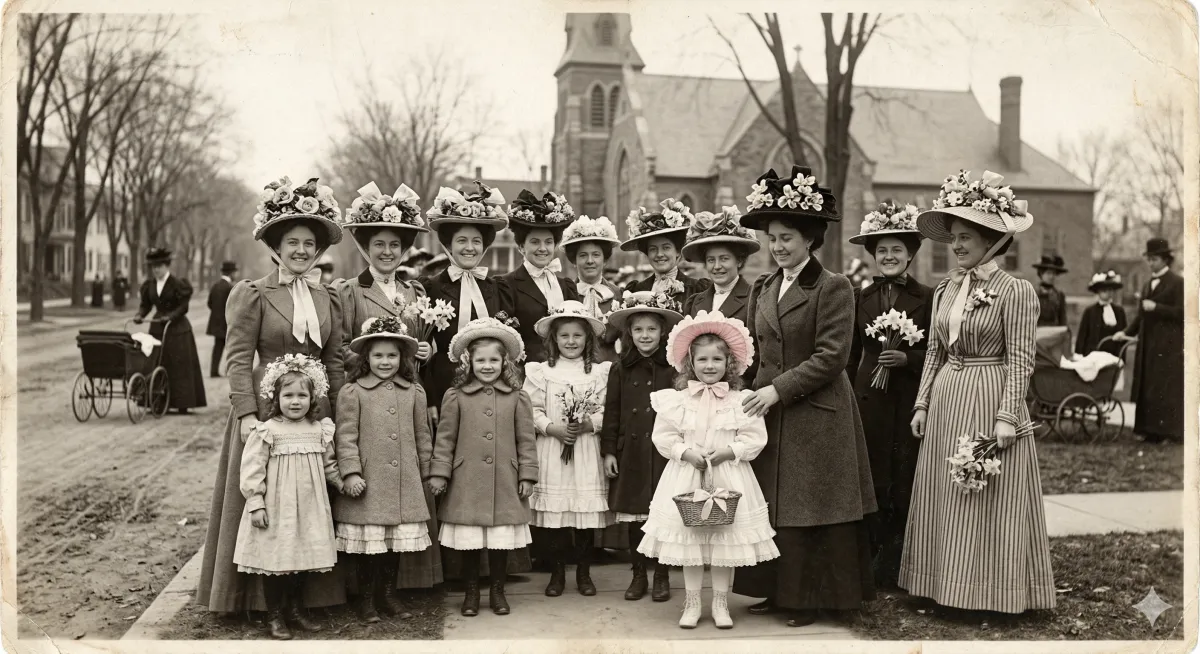
For genealogists, traditions like the Easter bonnet provide more than charming anecdotes—they offer context and clues about family life, social status, and cultural identity. Photographs often capture these moments: children and adults in their best spring attire, sometimes in formal studio portraits or on neighborhood streets after church services. Letters and diaries may note preparation, celebrations, or descriptions of community events.
Examining these materials alongside church and civil records can paint a fuller picture of an ancestor’s world. A bonnet might reveal an immigrant family’s adaptation of old-world traditions or a rural family’s resourcefulness in decorating with available materials.
Easter Parades: From Church Streets to City Boulevards
By the late 19th and early 20th centuries, Easter celebrations expanded from private observances to public spectacles. Perhaps the most famous example is the Easter Parade in New York City. What began as post-church promenades became grand displays along Fifth Avenue, where crowds gathered to see and be seen.
Participants paraded in their finest attire, and the Easter bonnet became a focal point. Women, men, and children alike used fashion to express creativity, social identity, and seasonal joy. Some bonnets were elegant; others were whimsical or extravagant. For immigrant families and newcomers, these parades offered a chance to assert presence and belonging in a new community.
Urban vs. Rural Easter Traditions
While city parades offered spectacle, rural communities celebrated in quieter but equally meaningful ways. Families gathered after church services for shared meals, children played outdoors in spring sunshine, and bonnets—often handmade—were worn with pride. In both urban and rural settings, the focus was the same: community, renewal, and marking the season with joy.
For genealogists, these differences can be critical. A photograph from a rural town may show a simple bonnet but still reflect family creativity and participation. A city parade photo might reveal social networks, neighbors, and cultural influences. Recognizing these nuances allows researchers to interpret images and records with greater insight.
Cultural and Social Significance
Easter bonnets were influenced by a variety of cultural backgrounds. European customs, particularly from England, France, and Germany, shaped North American practices. Over time, traditions blended, producing unique regional expressions.
For example:
Immigrant families often integrated materials or designs from their homeland.
Rural families relied on local resources—flowers, fabric scraps, or repurposed decorations.
Social status could be subtly communicated through the intricacy of a bonnet.
These small details reveal not just fashion choices but family values, resourcefulness, and adaptation across generations.
The Role of Children
Children were central to the tradition. For many, Easter bonnets were a creative project, a family activity, and a rite of passage. Boys and girls alike participated in parades or church gatherings, learning cultural customs while celebrating spring.
Documenting children’s participation can also enrich genealogical records. Family photos, school newsletters, and local newspapers may capture these moments, providing names, dates, and context that official records often omit.
Preserving the Tradition in Family History
Genealogists can preserve and study Easter traditions in several ways:
Photographs: Studio portraits or candid outdoor shots capture clothing, social interactions, and neighborhood settings.
Letters and Diaries: Descriptions of holiday preparation, church attendance, or parade participation add narrative depth.
Church Records: Easter service attendance, family events, or celebrations may be noted.
Community Publications: Local newspapers or newsletters may record parades, contests, or social events tied to Easter.
Oral Histories: Family stories of preparing bonnets, attending parades, or neighborhood celebrations connect records to lived experience.
Through these sources, we gain insight not only into what ancestors wore but how they lived, what they valued, and how they expressed identity and joy.
Reflections on Renewal and Community
The Easter bonnet is more than a fashion statement. It is a lens through which we can view family life, social norms, and cultural evolution. It reminds us that ancestors were creative, community-minded, and hopeful—just as we are today.
Whether in a bustling city parade or a quiet rural service, Easter traditions offered opportunities to connect, to celebrate, and to leave a legacy. For genealogists, these moments are invaluable—they enrich the story behind the names and dates, giving life to ancestors’ experiences.
Connecting Past to Present
Today, Easter bonnets are less common, though still cherished in some communities and schools. Modern celebrations—egg hunts, family gatherings, spring crafts—reflect the same themes of renewal and connection.
When researching your family history, look for continuity:
Are there photographs of children in homemade hats?
Do letters describe family preparations or community parades?
Can oral histories reveal personal touches or traditions that survived decades?
These traces tie us to the past, showing that while styles change, the spirit of celebration endures.