When Our Ancestors Took Root
When Our Ancestors Took Root
There comes a time in every life when growing up becomes making a life.
The child who once depended on parents begins making decisions of their own. They leave school, learn a trade or begin a career. They form friendships, fall in love, marry, establish a home and perhaps begin raising children.
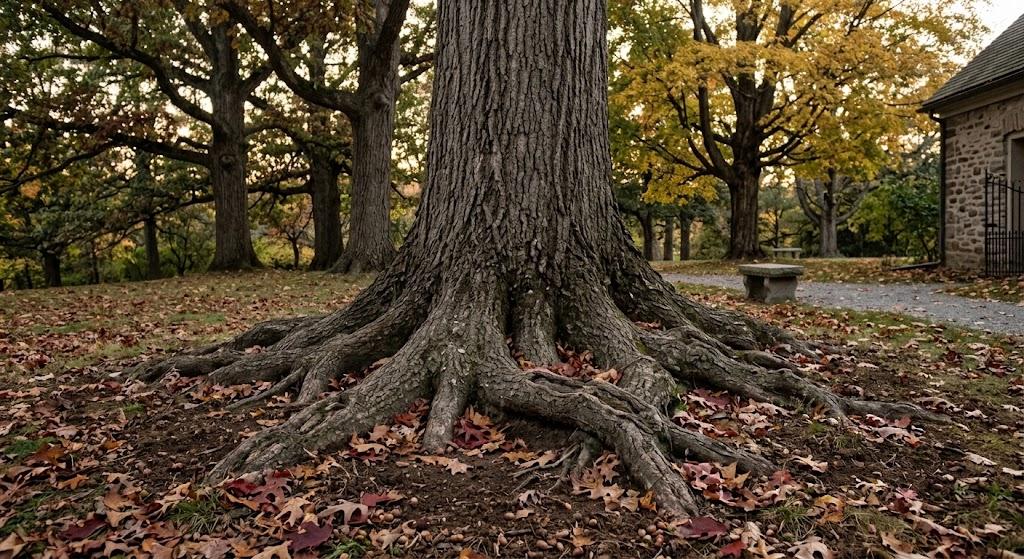
In nature, this is the season of strong growth. Roots deepen, branches spread and a young plant begins to establish itself.
Our ancestors did much the same.
This stage of their lives can be one of the most rewarding to explore because it is when they began to take root in the world around them.
And the records they created can tell us a great deal about who they became.
From school to work
Education is often one of the first clues to understanding an ancestor's transition into adulthood.
School records, yearbooks, photographs and newspapers may help establish where a young person lived and attended school. But education was not always formal, particularly for earlier generations.
An ancestor may have learned a trade through an apprenticeship, entered the family business or gone directly into employment.
Census records and city directories can help trace these changes. An occupation listed as “labourer” in one record might become “carpenter,” “merchant” or “teacher” a few years later.
Those changes matter.
They tell us that our ancestors were not simply moving through time. They were learning, adapting and making choices.
Marriage changes the family story
Marriage is another significant turning point.
A marriage registration or church record can connect two families that previously appeared unrelated. Depending on the record and time period, it may provide the names of the bride and groom, their ages, residences, occupations, parents or witnesses.
The witnesses can be particularly interesting.
They may be siblings, parents, friends or future relatives. Following those names can sometimes uncover connections that aren't immediately apparent in the family tree.
Marriage records can also help resolve questions about identity.
If an ancestor appears under slightly different names in different records, a marriage record may provide the bridge between them.
But once again, it is important to remember that records vary. The information available depends on the jurisdiction, the date and the type of record.
Where did they make their home?
One of the questions I find most interesting in genealogy is simply:
Where did they live?
Our ancestors may have lived in several places during their adult lives. They may have moved for work, married someone from another community, purchased land, followed family members or moved to a growing town.
Sometimes a move is obvious.
A census places the family in one location, and several years later another record puts them somewhere else.
The more interesting question is often why they moved.
That is where additional sources become important.
Land records can reveal property ownership. City directories can show addresses from year to year. Newspapers may report a move, a business opening or the sale of a farm. Maps can help us understand how far the family actually moved and what the journey might have involved.
A change of address can become a story.
Work tells us more than an occupation
An occupation recorded on a census form may seem like a small detail.
It isn't.
Work shaped where people lived, who they knew and how they spent their days. It could determine whether a family lived in a rural community, a mining town, a railway centre or an industrial city.
It can also lead us to records we might not otherwise consider.
A railway employee may appear in railway employment records.
A soldier may have military records.
A teacher may appear in school board records or local newspapers.
A farmer may leave traces in land, agricultural or tax records.
A shipbuilder, miner, merchant or factory worker may be connected to the records of the industry in which they worked.
Once you know what an ancestor did for a living, you can begin asking a much better question:
What records were created by that occupation?
Follow the family, not just the individual
As families grow, their records multiply.
A child's birth record may establish where the family was living. Another child's baptism may show a church connection. A school record may place the family in a different community. A newspaper article may mention a family celebration or business achievement.
These seemingly unrelated pieces can become important markers along a timeline.
This is also where keeping a chronology can be extremely useful.
Rather than simply entering names and dates into a family tree, create a timeline for your ancestor:
Birth → childhood → education → first employment → marriage → children → moves → property → community involvement
Then look for gaps.
Those gaps are questions waiting to be answered.
When the records disagree
The years when our ancestors were establishing themselves can also be the years when genealogists encounter conflicting information.
An age in a census may not agree with an age on a marriage record.
A birthplace may change from one record to another.
An occupation may be described differently over time.
Even a person's name may appear in several forms.
This is where it becomes important not to force the records to agree.
Instead, record the discrepancy.
Consider when each record was created, who provided the information and how close that person was to the event being recorded.
A birth registration made at the time of a birth may carry different evidentiary weight from a census completed decades later.
The goal isn't to make every record fit neatly.
The goal is to understand why the records differ and determine which evidence provides the strongest support for your conclusion.
The places where our ancestors took root
Eventually, the scattered records begin to reveal something larger.
You may discover that an ancestor spent forty years in the same community.
Perhaps the family owned the same farm for generations.
Perhaps they lived beside a railway line because that was where the work was.
Perhaps they moved repeatedly because their occupation required it.
Perhaps they left one country, crossed an ocean and established an entirely new life.
These aren't simply locations on a family tree.
They are the places where your ancestors built their lives.
Understanding those places can transform your research.
Look at historical maps. Explore local newspapers. Read community histories. Find photographs of the streets, farms, schools, churches or businesses where your ancestors spent their days.
When you can place an ancestor in their community, the records begin to feel much less like paperwork.
They become evidence of a life.
A Genealogist's Takeaway
Choose an ancestor who lived during a period of change.
Build a simple timeline of their adult life and look for the transitions:
Where did they work? Who did they marry? Where did they live? When did they move? What property did they own? What organizations or communities were important to them?
Then ask one question for each transition:
What record might have been created because of this event?
That question can open doors.
A marriage creates a record.
A move may create a land or directory record.
A new occupation may lead to employment or professional records.
A new community may connect your ancestor to newspapers, churches, schools or organizations.
The more we understand about the life our ancestors were building, the more intelligently we can search for the records that document it.
Like a tree sending its roots deeper into the earth and its branches outward toward the sky, our ancestors were putting down roots while their lives expanded around them.
Those roots are still there.
Our research simply helps us find them.