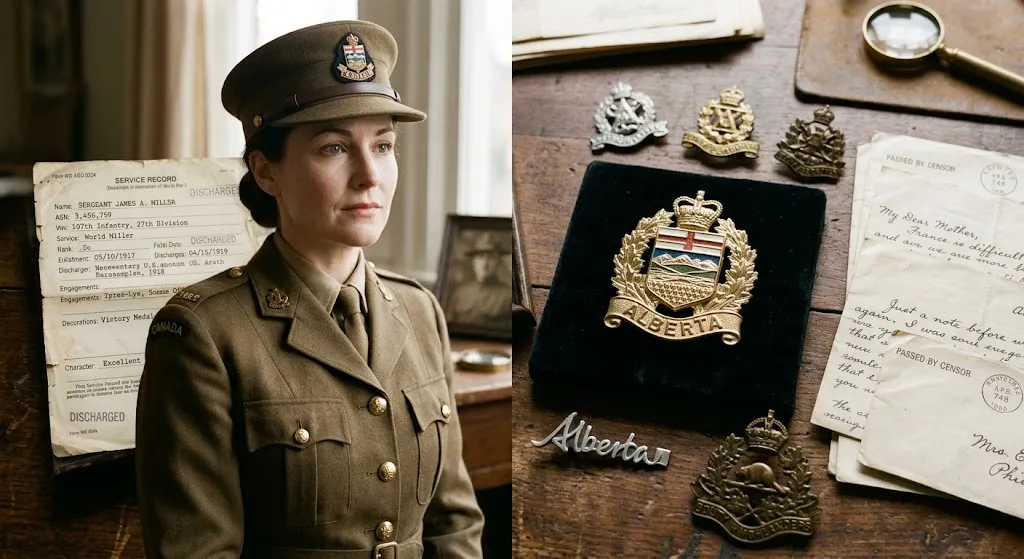
The Women Who Serve
The Women Who Served: Discovering the Military Stories Hidden in Our Family Trees
Remembering the women whose service, courage and contributions deserve a place in our family histories.
Looking Beyond the Men in Uniform
When we research our ancestors’ military experiences, it is easy to picture the familiar image of a soldier in uniform. Yet women have also served their countries through military service, nursing, communications, administration, transportation and many other essential roles.
Some women served in uniform alongside the armed forces. Others supported wartime operations through civilian organisations or worked in industries that kept military operations moving. Their experiences differed, but each offers an opportunity to understand how conflict shaped individual lives and families.
For family historians, discovering a woman who served can require a different approach to research. Her story may not be found in the same records as those of male relatives, and her service may have been described differently in family documents. A photograph, a uniform badge, a letter or a small object passed down through generations may provide the first clue.
Sometimes, however, the object that starts the investigation is not found in a family collection at all. It may emerge from an unexpected place, far from where we might expect it to have been used.
Women's Military Service Took Many Forms
Nursing Sisters and Medical Service
Nursing sisters played an important role in Canada's military history. During the First and Second World Wars, Canadian nurses served in hospitals, medical units and other settings where wounded and ill personnel needed care. Their work could bring them close to the dangers and hardships of military operations.
A family photograph of a woman wearing a nursing uniform, a nursing certificate, a service record or a letter describing hospital work may help identify this part of an ancestor's life. Research should include both military records and professional nursing records, as the two may provide different details.
Women in Uniform During the Second World War
The Second World War brought significant changes to women's participation in the armed forces. In Canada, women served in organisations such as the Canadian Women's Army Corps, the Women's Division of the Royal Canadian Air Force and the Women's Royal Canadian Naval Service.
Women took on duties in administration, communications, transport, technical work and other areas that supported military operations. Their responsibilities varied by service and period, but their contributions helped free more men for other military duties.
In the United States, women also served through organisations such as the Women's Army Corps (WAC). American servicewomen worked in a variety of roles, including clerical, technical, medical and administrative positions. Their uniforms and insignia can provide valuable clues when researching a woman who served with the United States military.
When examining a photograph or badge, it is important to identify the insignia accurately. Uniform designs changed over time, and some insignia were associated with a particular service, rank or appointment rather than with women alone.
Women in Other Forms of Service
Not every woman who contributed during wartime belonged to a formal military service. Women worked in factories and shipyards, supported transport and communications, volunteered in community organisations and helped provide essential services at home.
These experiences should not be confused with military enlistment, but they belong in the wider history of how families and communities responded to conflict.
When researching a woman, begin with the evidence available and establish what kind of service she performed. An occupation, uniform, badge or family recollection can point toward a particular organisation, but further research is needed before drawing conclusions.
A Hat Badge Found on a Farm in Alberta
Sometimes an object can connect a local discovery with a much larger historical story.
My brother-in-law found a military hat badge on a farm north of Hanna, Alberta, Canada. At first glance, it might seem an unlikely place to discover an American military insignia. Yet its design and historical identification offer a fascinating starting point for exploring women's service during the Second World War.
The badge features a spread-winged American eagle, a shield, a surrounding wreath-like design and the motto E Pluribus Unum. The Latin phrase is commonly translated as “Out of many, one.” It expresses the idea of unity among the states that form the United States.
Museum collections provide useful comparisons for identifying the badge. The Smithsonian National Air and Space Museum documents a United States Army Air Forces officer's cap badge featuring the American eagle, shield and motto. Its collections also include an insignia specifically identified as a female officer's cap badge for the United States Air Force.
These records support the connection between this style of insignia and American military officers. The design was not exclusively for women, however. It was an officer's cap insignia, and women officers could wear the appropriate version as part of their uniform.
The badge is dated to approximately 1940–1950, a period that encompasses the Second World War and the transition that followed. The United States Air Force became a separate military service in 1947, making the period particularly interesting when examining the history of military uniforms and insignia.
The badge's discovery raises another question: how did an American military item come to rest on a farm in central Alberta?
Hanna developed as a railway and agricultural centre, and its location along the railway network of the period provides useful historical context. Railways connected communities, industries and people across Canada. However, the badge's presence on a farm does not establish how it arrived there or who originally owned it. A service member may have travelled through the region, an item may have changed hands, or it may have reached the farm by another route. At present, these remain possibilities rather than established facts.
For family historians, this is precisely what makes the discovery interesting. The object has been identified, but its personal history remains open to investigation. Who wore it? Was the owner an American servicewoman stationed or travelling in Canada, or did the badge arrive through another connection? Could local newspapers, family papers or historical records eventually provide an answer?
The discovery is a reminder that military history can surface in unexpected places. A small piece of metal found in rural Alberta can lead us to the uniforms, ranks and service experiences of women in the American armed forces, while also raising questions about the movement of people and objects across borders.
Where to Begin Your Research
When you discover a woman who served, begin by gathering the information already available within your family. Record her full name, birth date, home address, approximate service dates and any known organisation or unit.
Look for photographs, letters, diaries, certificates, medals and newspaper clippings. Examine uniforms and insignia carefully, noting visible lettering, symbols, colours and fastenings. If you are researching an object, photograph both the front and back, record its measurements and document where it was found.
Library and Archives Canada provides a useful starting point for researching Canadian military history:
https://www.canada.ca/en/library-archives/collection/research-help/military-history.html
If the woman served with the United States military, American archives and museum collections may be more appropriate. The United States National Archives provides information about military personnel records and other historical records:
Remember that the country where an object was found does not necessarily identify the country or organisation to which it belonged. Follow the evidence wherever it leads.
Follow Professional and Civilian Records
Military files are only one part of the research process. If your ancestor worked as a nurse, investigate professional registration and nursing records. If she worked in a factory or shipyard, employment records, local newspapers and workplace histories may provide additional context.
Census records, immigration documents, passenger lists and civil registration can help establish where she lived before and after her service. Newspapers may report enlistment, appointments, awards, homecomings or community recognition.
These sources can also help explain why a woman entered service and what happened when her service ended. Some returned to their former occupations, while others pursued new careers, married, immigrated or moved to different communities.
The aim is to connect the service record to the rest of her life, rather than treating her wartime experience as an isolated chapter.
Read the Photograph as a Research Clue
Photographs often preserve details that written records leave out. Look closely at uniforms, cap badges, shoulder insignia, medals, name tags and the setting in which the photograph was taken.
Compare these details with documented examples from museums and archives. Take care with online identifications: two badges may look similar while representing different services or ranks.
Record what you can observe separately from what you believe it means. If a badge resembles an example in a museum catalogue, describe the resemblance and cite the catalogue, but do not claim that the objects are identical unless the evidence supports that conclusion.
The same principle applies to family stories. A relative's recollection may provide a valuable lead, but it should be compared with records wherever possible.
Reconstruct Her Life Before and After Service
A woman's military or wartime experience is only one part of her story. To understand her life more fully, investigate her family circumstances, education, occupation and community before she entered service.
After identifying her service, follow the evidence into the years that came afterward. Did she return to the same town? Did she continue working in a related field? Did her experiences influence her later life or the choices available to her?
This broader approach is especially important when records are incomplete. A census entry, employment notice or letter may not mention military service directly, but it may help establish a timeline or identify a person who can be researched further.
When the Records Are Difficult to Find
Not every woman's service will be easy to document. Records may be incomplete, names may have changed, and some collections may be indexed under an organisation rather than an individual's name.
Try variations of names, initials and spellings. Search by the organisation, unit, occupation or location as well as by the person's name. If you are investigating a badge, search museum catalogues for its distinctive symbols and inscriptions.
Do not assume that a lack of an obvious personnel file means that a woman did not serve. She may have worked in a civilian capacity, belonged to a different organisation or left records in a collection you have not yet explored.
Keep track of the sources you have searched and the questions that remain unanswered. This will help you avoid repeating work and make it easier to recognise a new clue when one appears.
Your Research Challenge
Choose one woman in your family history whose wartime or military experience is known, suspected or still a mystery.
Begin with what you already have: a name, a photograph, a family story or an object. Record the details, identify the likely service or organisation, and search the relevant archives and museum collections.
If you have a badge or uniform item, do not rush to identify it from appearance alone. Compare it with documented examples, examine the reverse and fastening, and preserve the information about where it came from.
You may discover a well-documented military career. Alternatively, you may uncover a civilian contribution that has been overlooked in family accounts. Either way, you will be adding depth to your understanding of the women who shaped your family's history.
Remembering the Women Behind the Records
Women's service took many forms, and the evidence is not always found where we expect it. A nursing certificate, a military record, a photograph or a badge discovered on a farm can each open a path into the past.
The badge found north of Hanna, Alberta, illustrates how one object can connect a local discovery with the wider history of women in uniform. Its military design has a documented parallel in museum collections, while the circumstances of its arrival in Alberta remain an intriguing question for further research.
For family historians, the lesson is simple: look closely, verify what you can, and leave room for questions that have not yet been answered.
By doing so, we give women’s stories the attention they deserve—not only for the service they performed, but also for the lives they lived and the histories they left behind.