Echoes of the Past: What Our Ancestors Would See Today
Echoes of the Past: What Our Ancestors Would See Today
History has a way of reminding us how much has changed—and yet, how much remains the same. Imagine stepping back 120 years and then imagining your ancestors suddenly seeing the world as it is today. Streets lined with cars instead of horse-drawn wagons, electricity replacing candles, and the constant hum of modern life would be as astonishing as it is familiar. For genealogists, considering these contrasts is more than an intellectual exercise; it is a way to breathe life into the stories of our forebears and understand their daily experiences in richer, more vivid detail.
A Vignette from the Past
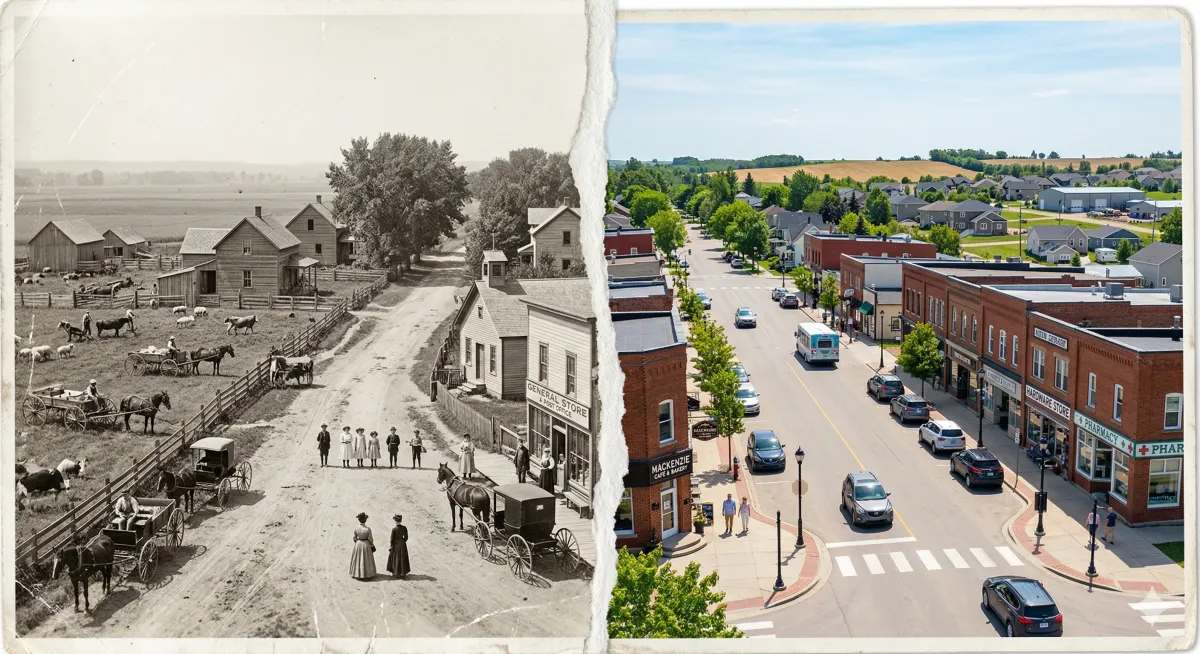
It’s 1892, and young Samuel Whitaker, aged 14, has just completed his chores on the family farm. He’s accustomed to the rhythm of the seasons—plowing in spring, tending crops in summer, harvesting in fall, and conserving in winter. Suddenly, in a whimsical twist of imagination, he steps into a bustling town in 2005. Cars zoom past where horses once trod, electric lights illuminate the streets where lanterns flickered, and digital signs replace hand-painted boards. Samuel’s eyes widen as he notices children playing in parks with gadgets and toys his imagination could barely conceive. Yet, some things remain familiar: families gathering, neighbors chatting, and the enduring pull of community. Through this imagined experience, we glimpse both the magnitude of change and the continuity of human connection.
Life in the Late 19th Century
To understand what Samuel would notice, we need to revisit the late 1800s. Life was dictated by the seasons, geography, and available resources. Technology, while advancing, was limited. Daily life included:
Labor-intensive agriculture: Plowing, planting, and harvesting required hours of physical labor.
Transportation by horse and wagon: Travel was slower, limited, and often dictated where families could settle.
Manual household chores: Laundry, cooking, and cleaning relied on human or animal labor.
Local communities: Social interaction was primarily face-to-face with neighbors and extended family.
Limited communication: Letters or telegraphs carried news, with weeks or months passing between correspondence.
In short, life was slower, cyclical, and directly tied to the natural world.
The Transformation to the Modern Era
By the early 2000s, much of daily life had been transformed. Consider the changes Samuel observes:
Transportation: Automobiles replaced horses, dramatically increasing mobility.
Electricity: Homes, streets, and workplaces were illuminated and powered by electricity.
Technology: Telephones, computers, and digital devices altered communication and access to information.
Healthcare: Advances in medicine and public health increased life expectancy.
Urbanization: Towns grew into cities, and communities spread out geographically.
Education: Schools became standardized, with access to knowledge unimaginable in the 1800s.
For a teenager like Samuel, these changes would be both fascinating and overwhelming. Yet some constants endure: family meals, seasonal celebrations, and community gatherings remain recognizable touchstones.
Rural vs. Urban Experiences
The contrast between rural and urban life would also stand out. In rural areas:
The landscape: Fields, forests, and rivers dominate daily life.
Work patterns: Farming, livestock care, and seasonal cycles shape routines.
Community ties: Strong, close-knit neighbor networks provide support and social structure.
In urban centers:
Infrastructure: Paved streets, public transportation, and dense neighborhoods create a different rhythm.
Social opportunities: Shops, theaters, and community events provide entertainment and cultural exposure.
Population density: Streets bustle with people, often strangers, reflecting diversity and anonymity.
Understanding these contrasts allows genealogists to interpret ancestral records more accurately. Census data, photographs, and letters reveal not only who lived where but how life was experienced differently depending on the environment.
Technological and Social Shifts
Samuel’s imagined visit also highlights the profound impact of technology and social change:
Communication: Telephones, email, and text messaging replace letters and face-to-face coordination.
Education and literacy: Schools teach standardized curricula, vastly increasing literacy and knowledge access.
Entertainment: Movies, television, and online media create new forms of social engagement.
Consumer culture: Goods and services are widely available, a stark contrast to self-sufficiency and local trade.
Genealogists benefit from recognizing these shifts. They explain changes in family structure, migration patterns, and daily decision-making. Understanding context helps researchers interpret census occupation data, school attendance, and travel records in more meaningful ways.
Family Life Across Generations
Despite technological and social changes, some aspects of family life remain surprisingly consistent. Holidays, rituals, and seasonal routines continue to bind generations together. For example:
Easter or Christmas gatherings: Ancestors celebrated spring and winter festivals much as we do today.
Family chores and shared labor: Cooperative effort, whether on farms or household tasks, remains foundational.
Community support: Neighbors and kin often provide assistance in times of need, echoing past traditions.
These constants remind us that genealogy is not just about tracking names and dates—it is about understanding enduring human behaviors and values.
Connecting Historical Context to Genealogy
For genealogists, imagining the past in relation to the present enriches research in several ways:
Photographs: Identifying clothing, settings, and seasonal markers in ancestral images.
Letters and Diaries: Understanding descriptions of travel, work, and social events in context.
Census Records: Interpreting occupation, literacy, and household composition more accurately.
Land and Property Records: Appreciating the influence of location on lifestyle and mobility.
Migration Patterns: Recognizing why families moved or stayed based on environmental and technological factors.
By bridging past and present, researchers can craft narratives that give ancestors’ experiences depth, nuance, and humanity.
Observing Change Through a Personal Lens
Imagine the difference in perspective for someone like Samuel, now viewing early 2000s life. The pace, technology, and urbanization are staggering, yet he would also recognize familiar rhythms: people waking, eating, working, celebrating, and gathering. This reflection can inspire genealogists to:
Appreciate the continuity of family traditions across centuries.
Explore personal narratives behind official records.
Highlight the lived experience of ancestors for modern readers.
These exercises transform research from a series of facts into vivid stories.
A Reflection on Time
Time is both relentless and cyclical. Our ancestors lived in a world governed by the sun, the seasons, and the limitations of technology. We live in a world defined by speed, connectivity, and constant change. Yet across centuries, the human desire for family, community, and belonging remains constant.
For genealogists, understanding this duality—the differences and the similarities—turns raw data into a tapestry of life, helping us connect emotionally with those who came before.