Property, Probate, and Power: When Women Owned More Than We Think
Property, Probate, and Power: When Women Owned More Than We Think
When we think of history, we often imagine it written by men.
Landowners, politicians, soldiers — their names dominate records, while women appear only in relation: wife, mother, daughter.
But if you look closely, women were not always powerless. They owned property, managed estates, and exercised authority — sometimes quietly, sometimes boldly.
For genealogists, discovering these threads can completely reshape how we view female ancestors. March, Women’s History Month, reminds us to explore these hidden forms of influence.
Let me introduce you to Clara Benson.
Meet Clara Benson
Clara Benson, born 1852 in Halifax, Nova Scotia, was the eldest of five children. Her father, a local merchant, owned several rental properties in the city. Her mother ran the household, cared for extended family, and maintained a thriving small garden business that supported neighbors and friends.
When Clara married, the law generally subsumed her identity under her husband’s name. Yet, she became a woman of remarkable agency, documented only indirectly through property, probate, and legal documents.
Clue #1: Property Records
In 1880, Clara’s father passed away.
The property records reveal a surprise: Clara inherited a small townhouse in downtown Halifax — a legal recognition of her rights as a daughter.
Property records are invaluable for tracing women’s lives. In addition to indicating ownership:
They may reveal maiden names, family relationships, and heirs.
Deeds often list women explicitly when land was transferred after a father’s death.
Patterns of ownership across generations can identify kin networks.
Clara’s townhouse purchase highlights how women could exercise economic influence even when public records downplay it.
Clue #2: Probate Files
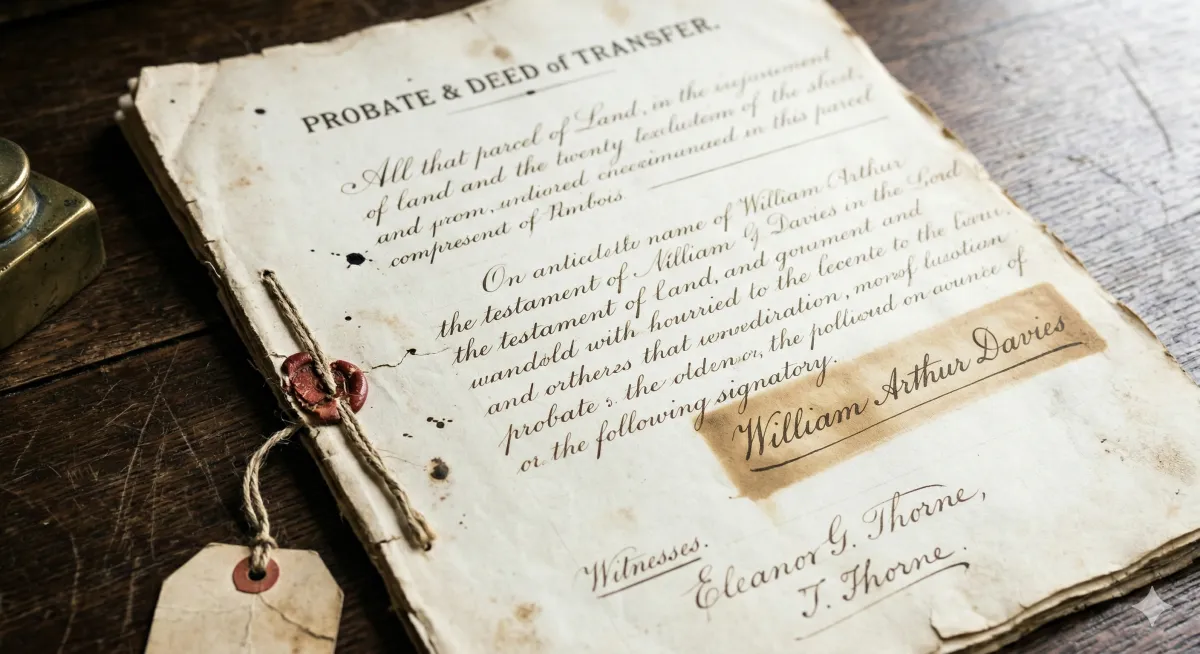
Probate records are a goldmine for discovering hidden female authority.
When Clara’s husband died in 1901, the probate documents show:
“Clara Benson, widow, named executrix of the estate, to manage property and oversee the distribution of assets among the children.”
Here, Clara is not just a passive recipient; she is an active decision-maker.
Probate records can reveal:
Women as executors, administrators, or beneficiaries
Financial agency, including control over property sales or investments
Guardianship of children in the event of a spouse’s death
Through probate, Clara’s influence becomes visible — a stark contrast to her absence in many other official records.
Clue #3: Marriage and Inheritance Nuances
Clara’s first child was born in 1875. At the time, property laws varied:
Under coverture, married women often could not legally own property independently.
However, if property was inherited from a parent, it might remain in her name.
Trusts or prenuptial agreements could protect property and provide women with economic agency.
In Clara’s case, her inherited townhouse remained under her legal ownership even after her marriage — enabling her to rent it out, invest income, and pass it on to her children.
Understanding local inheritance and property laws is key when tracing women in genealogical research. What seems like an “absent” ancestor may actually be a property owner behind the scenes.
Clue #4: Legal Documents Reveal Agency
Beyond property and probate, women appear in court records, guardianship papers, and contracts.
Clara appears in a city council petition in 1895, signing with her full name, protesting a proposed zoning change near her townhouse.
These legal actions are rare, but they demonstrate:
Women could act independently when legal frameworks allowed
Civic engagement might leave archival traces that reveal a woman’s life, status, and personality
Even small, seemingly minor documents may provide critical insights
For genealogists, thinking beyond traditional “female-only” records is essential.
Clue #5: Tracking Property Across Generations
By 1920, Clara’s townhouse had been sold, with proceeds divided among her children.
Tracing property transactions over time can:
Confirm family relationships
Reveal economic status
Identify connections between households
Provide context for migration patterns
This approach is particularly useful when other documents are sparse. Women’s lives may appear hidden, but property and probate files illuminate their agency.
Practical Strategies for Genealogists
If you want to uncover the legal and economic footprints of women ancestors:
Search property records for inherited or purchased land
Examine probate files, focusing on executrix roles
Look for guardianship papers or court cases where women appear
Compare census information with land and probate records to track continuity
Investigate trusts, dowries, and inheritance settlements
Study local laws to understand women’s rights in different periods
Explore city directories for businesses or rental properties under female names
These records are often overlooked but can tell powerful stories about women’s lives.
Clara’s Legacy
Clara Benson was not famous. She did not lead movements or campaign for votes (though she supported both in her community).
Yet she left a profound impact:
She maintained financial independence in a restrictive era
She guided her family’s wealth and inheritance
She influenced the urban landscape through property decisions
By uncovering these details, genealogists can restore agency to women who appear absent in conventional records.
Every townhouse deed, probate record, or legal signature is a fragment of their story — waiting to be assembled into a portrait of strength and influence.
Final Thoughts
Women’s History Month reminds us to look carefully at the spaces women occupied — even when society tried to make them invisible.
Property, probate, and legal documents may reveal what censuses, church registers, and newspapers often obscure.
When you trace these records, you reclaim not only the woman’s name but her agency, her influence, and her story.
Clara Benson teaches us that power does not always appear loudly. Sometimes, it is quietly inscribed in a deed, a signature, a document — the hidden proof of lives lived boldly.