Hidden in Plain Sight: Finding the Women in Your Family Tree Post
Hidden in Plain Sight: Finding the Women in Your Family Tree
In nearly every family tree, there is a pattern hiding in plain sight.
The men are easy to follow. They appear in land records. Military files. Tax rolls. Wills written in their own names. Their signatures stretch boldly across history.
And then there are the women.
They are there — and yet not there. Listed as “wife.” Identified as “mother.” Referred to in probate as “the widow.” Their names change. Their identities blur. Their stories slip quietly between the lines of official records.
And yet, without them, none of us would be here.
March, recognized as Women’s History Month in Canada and the United States, invites us to look again — especially at those women who have been hiding in plain sight within our own family trees.
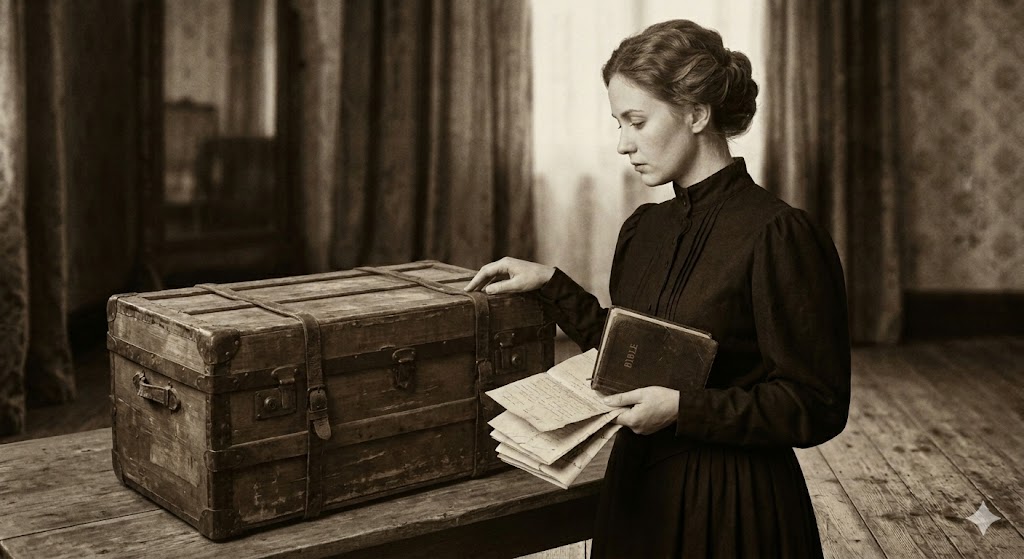
Let me introduce you to one of them.
Meet Margaret O’Connell
Margaret O’Connell first appears in the 1881 census of Ontario as “Maggie,” age 23, wife of Thomas Walsh, mother of two young children.
There is no maiden name listed. No occupation. No birthplace beyond “Ireland.” No hint of the journey she made.
At first glance, Margaret seems like a genealogical dead end — a supporting character in someone else’s story.
But Margaret’s life did not begin when she married Thomas.
And it certainly did not end with the census entry.
The challenge for genealogists is this: How do we find a woman who was recorded only in relation to others?
Why Women Disappear in Records
Historically, most legal and civic systems recorded men as heads of household. Under English common law — which shaped Canadian and American recordkeeping — married women were subject to the legal doctrine of coverture. Their legal identities were absorbed into that of their husbands.
As a result:
Property was often held in a husband’s name.
Children were registered under the father’s surname.
Tax records rarely listed wives.
Voting records excluded women entirely until the 20th century.
Even when women worked — as midwives, seamstresses, farmers, shopkeepers — those roles were frequently unrecorded.
So, when we look for Margaret O’Connell, we are not just battling time. We are navigating a system that was not designed to preserve her independent identity.
Clue #1: The Marriage Record
The first breakthrough in Margaret’s story came not from a census — but from a parish register.
In 1878, a Catholic marriage record listed:
Thomas Walsh, son of Patrick Walsh and Ellen Murphy
Margaret O’Connell, daughter of Daniel O’Connell and Brigid Kelly
There it was. Her father’s name. Her mother’s name. A place of origin in County Cork.
Suddenly, Margaret was not just “wife of Thomas.”
She was a daughter. A sister. A woman with roots.
Marriage records are often the key to unlocking a woman’s earlier identity. They may include:
Maiden names
Parents’ names
Witnesses (often siblings)
Places of origin
Religious affiliation
If you are struggling to trace a female ancestor, always search for the marriage record — civil and church versions if possible.
Clue #2: Following the Witnesses
The marriage record listed two witnesses: Michael O’Connell and Mary Kelly.
Were they relatives?
A deeper dive into local baptismal records revealed that Margaret and Thomas named their second daughter Brigid — after Margaret’s mother — and their first son Daniel — after her father.
Naming patterns often preserve family connections when documentation does not.
Later census entries showed a widowed Mary Kelly living in Margaret’s household in 1891. Was she Margaret’s widowed mother? The ages aligned.
Women often cluster together in records — sisters serving as godparents, mothers living with married daughters, widows appearing in extended households.
When searching for women, widen the lens. Look at neighbors. Witnesses. Sponsors. In-laws.
Women leave trails — just not always obvious ones.
Clue #3: The Probate Surprise
When Thomas Walsh died in 1904, his probate file listed Margaret not merely as widow — but as executrix of his estate.
More surprising still, the property deed transfer showed Margaret’s name independently recorded in a later land transaction.
Under evolving property laws in Ontario by the late 19th century, married women could own property in their own right.
Margaret eventually sold a parcel of farmland to finance her eldest son’s apprenticeship.
That document — a simple land transaction — reveals a woman making financial decisions, shaping her family’s future.
Property records, probate files, and deed transfers can be unexpectedly rich sources for uncovering female agency.
Clue #4: Obituaries and Community Memory
Margaret’s 1916 obituary was brief but revealing:
“She was known for her strength of character and devotion to her family, having crossed the Atlantic in her youth to build a new life.”
There it was. The migration story.
Passenger lists later confirmed that a 17-year-old Margaret O’Connell arrived in Quebec in 1875, traveling alone.
Without the obituary hint, that passenger record might never have been connected.
Obituaries often include:
Birthplaces
Immigration details
Membership in church or community groups
Names of surviving relatives (often daughters under married names)
Never underestimate a local newspaper.
What Margaret Teaches Us
Margaret O’Connell was never a mayor. Never a soldier. Never a land baron.
But she crossed an ocean alone as a teenager.
She raised seven children.
She managed land transactions.
She sheltered her widowed mother.
She shaped the trajectory of her descendants.
And for decades, she existed in genealogical records as a single word: “wife.”
How many Margarets are in your tree?
Strategies for Finding Women Hidden in Plain Sight
If you suspect a woman has vanished in your research, try this:
1.Search marriage records for maiden names.
2.Trace baptismal sponsors and marriage witnesses.
3.Study naming patterns among children.
4.Examine probate files for widow references.
5.Review land records after a husband’s death.
6.Search obituaries for migration clues.
7.Look at extended household members in census records.
8.Research local women’s organizations, church guilds, or charitable societies.
Women often appear indirectly. The key is learning to read between the lines.
Reclaiming the Narrative
Women’s History Month is not only about famous suffragettes and political leaders. It is about the quiet endurance of women like Margaret — whose courage is woven into our DNA.
When we restore their names, we restore balance to our family stories.
We move from “wife of” to “daughter of Daniel and Brigid.”
From “widow” to “landowner.”
From “mother” to “immigrant pioneer.”
These women were never truly missing.
They were simply hidden in plain sight.
And they are waiting to be found.