
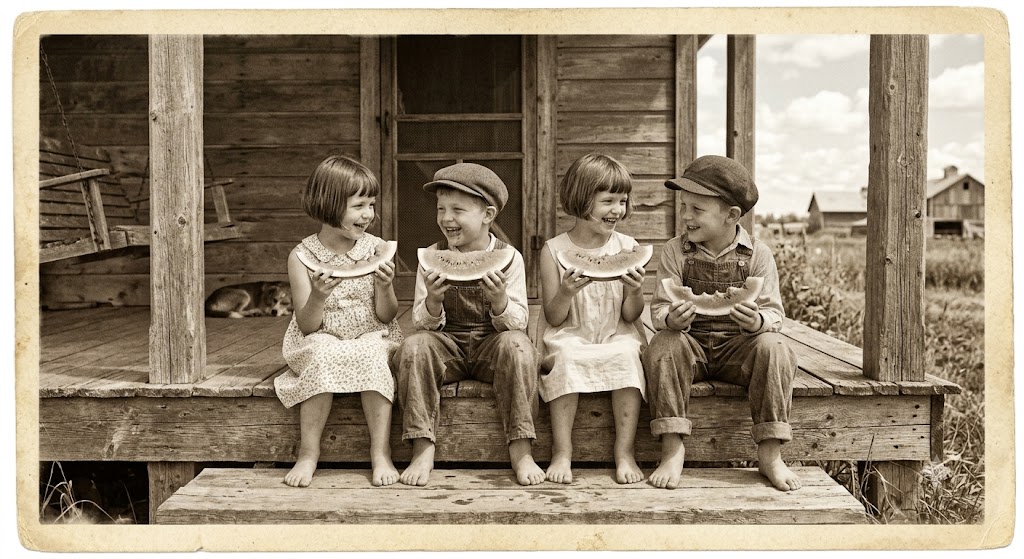
Summer Memories Through the Generations
Summer Memories Through the Generations
Long before the arrival of smartphones, video games, and air conditioning, the arrival of July signaled a profound shift in the daily lives of our ancestors. The schoolhouse doors closed, the days grew long and heavy with heat, and the rhythm of life adapted to the natural world. For our predecessors, summer was an intense contrast of grueling physical labor and sweet, unstructured freedom.
As family historians, we spent a lot of time documenting the major milestones of our ancestors' lives: their births, marriages, migrations, and deaths. But what about their everyday joys? What did a hot July afternoon feel like to your great-grandfather in 1910? How did your grandmother cool off during the sweltering summers of the Great Depression?
Stepping into the world of our ancestors’ childhood summers allows us to add vibrant, nostalgic color to our family tree. By exploring the chores that built their character, the simple games that sparked their imaginations, and the community celebrations that united their towns, we can reconstruct a beautiful, sensory portrait of youth across the generations.
Summer Chores on the Farm and in the Home
For the vast majority of our ancestors, summer was far from a three-month vacation. In rural communities, children were an essential part of the agricultural workforce. The moment the ground thawed, their hands were needed to sustain the family farm.
Young children were tasked with carrying cool water out to the men working the fields, weeding massive vegetable gardens, and collecting eggs from the henhouse. As they grew older, their responsibilities multiplied. Boys joined their fathers in the grueling work of the hay harvest— pitching heavy loose hay onto wagons under a relentless July sun. Girls spent long, hot days inside stifling kitchens alongside their mothers, snapping beans, peeling peaches, and tending to roaring wood stoves for the annual marathon of summer canning.
Even in urban centers, summer brought hard work. Children walked along cobblestone streets to collect chunks of ice from the ice wagon to keep the family’s icebox cold, or took on odd jobs to help their working-class families pay rent. These summer chores were a rite of passage, instilling a deep work ethic and sense of responsibility from an incredibly young age.
Simple Pleasures: Swimming Holes, Games, and Picnics
When the chores were finally done, however, the world became a playground. Without digital entertainment, our ancestors relied on their surroundings, their neighborhoods, and their pure imagination to pass the time.
The Local Swimming Hole
Before public pools became standard community features, the ultimate relief from the July heat was the local swimming hole. Whether it was a bend in a slow-moving river, a flooded quarry, or a hidden creek in the woods, these spots were sacred sanctuaries for neighborhood children. Armed with makeshift rope swings tied to old oak trees, our ancestors spent hours splashing in muddy waters, completely untethered from adult supervision.
Entertainment Before Electronics
On summer evenings, as the air finally cooled down, children gathered on front lawns and dirt roads to play games that had been passed down for centuries:
Kick the Can and Hide-and-Seek: Played under the glow of the moon or early streetlamps until mothers called them inside.
Catching Fireflies: Children would spend twilight hours chasing lightning bugs, gently placing them into glass mason jars with holes punched in the lids to make temporary lanterns.
Marbles and Jacks: Played on shady porches during the hottest hours of the day.
County Fairs and Community Celebrations
The absolute highlight of the summer season for many of our ancestors was the annual county fair, agricultural exhibition, or community picnic. For isolated farming families, these events were the ultimate social outlet—a chance to see old friends, showcase their hard work, and catch up on regional gossip.
Families would pack up their finest wagons or early automobiles and head to the fairgrounds. Farmers proudly displayed their prize-winning livestock, while women competed for blue ribbons in categories like quilt-making, pie-baking, and pickle-preserving. For children, the fair meant the intoxicating smells of roasted peanuts and cotton candy, the thrill of early carnival rides, and the chance to spend a hard-earned nickel on a cold bottle of sarsaparilla or a game of skill.
Deep Dive: Genealogy Records to Highlight
To capture these fleeting moments of childhood play and community life, you need to look at records that specialize in social history and personal narratives.
1. Diaries and Letters
Private diaries kept by teenagers or young adults are magnificent windows into daily summer life. Look for mentions of weather patterns, local social gatherings, baseball games, and church socials. Even small notes like "Went to the river to cool off" or "Finished the haying today" build an authentic timeline of your ancestor's summer experience.
2. Oral Histories
If you are fortunate enough to have living parents, grandparents, aunts, or uncles who grew up in the mid-20th century, their memories are your most valuable archive. Don't let their firsthand accounts of the "old days" slip away. (See our step-by-step framework below for capturing these stories).
3. Local and Community Newspapers
Step into the digitized pages of small-town newspapers from the month of July during your ancestor's youth. The local gossip columns in historical newspapers frequently printed blurbs like: "The youth of the town enjoyed a strawberry social on Tuesday night" or "Young Johnny Smith is recovering from a fall at the swimming hole." Newspapers also contain advertisements for local fairs, circus arrivals, and community picnics.
4. Historic Photograph Collections
Look closely at old family photo albums with a magnifying glass or high-resolution scanner. Don't just look at the posed portraits; search for the candid, accidental background details. Look for bare feet, rolled-up trousers, vintage swimsuits, ice cream social gatherings, and children playing with homemade wooden toys on a porch.
Step-by-Step: Recording Summer Memories from Older Relatives
Preserving the living memories of your oldest family members is a time-sensitive genealogical mission. Use this focused interview strategy during your next summer visit:
Set the Stage with Sensory Prompts:
Bring along items that trigger memory. Set down a vintage mason jar, a piece of homemade pie, or play a popular song from their youth.
Ask Targeted, Non-Leading Questions: Instead of asking, "Did you like summer?" try questions that target specific senses:
"How did your family keep the house cool at night during a July heatwave?"
"What was your absolute favorite treat to get at the county fair or local general store?"
"What kind of chores were you expected to finish before you were allowed to go outside and play?
Use an Audio or Video Recorder: Do not rely on your memory or hand-written notes alone. Capture the unique cadence of their voice, their spontaneous laughter, and the emotion in their tone using a smartphone recording app or external microphone.
Preserve and Share: Transcribe the interview, save the audio file in multiple secure digital locations (the cloud, an external drive), and share copies with the rest of the family alongside a few historic photos of the interviewee as a child.
Personal Reflection: Fireflies and Front Porches
When I look at old photographs of my grandfather as a sunburned, barefoot boy sitting on a wooden fence post in July of 1935, I feel a deep, comforting sense of continuity. He didn’t have a tablet or an air-conditioned bedroom to escape into. His summer world was defined by the perimeter of the family farm, the temperature of the nearby river, and the company of his siblings.
Decades later, when I was a child, he taught me how to sit quietly on the front porch at dusk and watch the fireflies emerge from the tall grass. He didn't just pass down a simple summer pastime; he passed down a generational tradition of pausing to appreciate the quiet, warm magic of a summer evening. When we step back into those memories, we realize that while technology changes at a breakneck pace, the simple human joy of a summer day remains exactly the same.
Conclusion & Call to Action
Uncovering the summer memories of our ancestors reminds us that our family history isn't just a collection of dates, military records, and legal files—it is a story of real people who laughed, played, worked hard, and enjoyed the simple gifts of life. By preserving these nostalgic narratives, we keep their spirits vibrant and relatable for future generations.
Now, it’s your turn: What is your favorite memory of summer from your own childhood, or a summer story passed down from a grandparent? Did you chase fireflies, swim in a secret creek, or attend a beloved family fair? Leave a comment below and let's keep these summer memories alive!