The Harvest of a Life
The Harvest of a Life
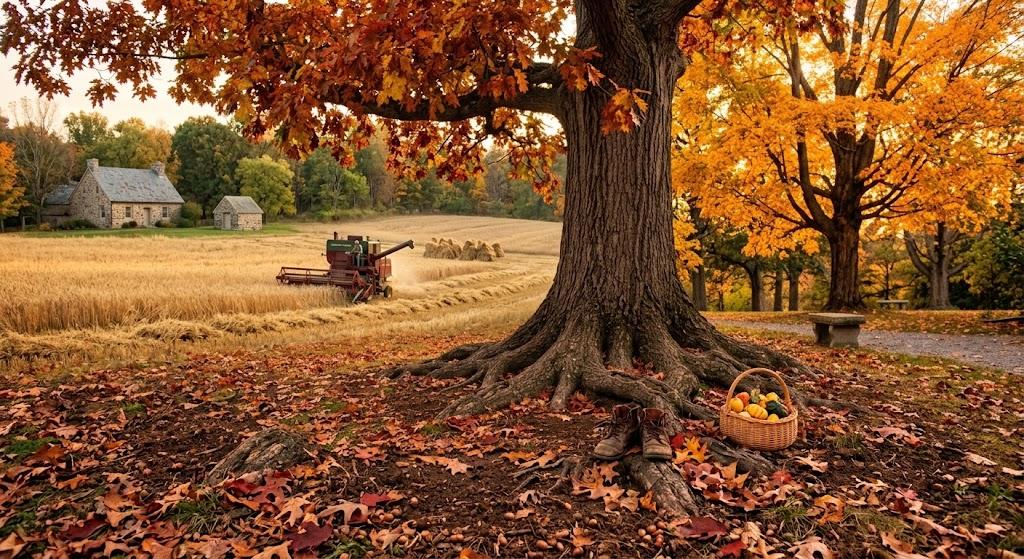
By the time October arrives, the landscape has changed. The greens of summer gradually give way to brilliant shades of gold, red and orange, gardens have been harvested, and the trees begin to release their leaves as they prepare for winter. There is something reflective about this time of year, a sense that we are pausing to appreciate what has grown before the landscape becomes quiet again.
Perhaps that is one of the reasons my grandmother loved October so much. She delighted in the colours and in watching the plants and trees move through their natural cycles. October was also the month of her birth, making the season even more personal to her.
When I think about genealogy through that same seasonal lens, I find myself asking a different question about our ancestors: What was the harvest of their lives?
When we begin researching an ancestor, we often concentrate on the dates that establish their place in the family tree. We search for a birth, marriage and death, and then try to fill in the years between them. Those records are important, but they represent only the framework of a life. The person who appears between those dates had a lifetime of experiences, relationships, work and decisions that may have left evidence in places we have not yet considered.
In many ways, genealogy is the process of gathering that evidence.
Looking beyond the basic records
By adulthood, our ancestors were creating records for many different reasons. They purchased or sold property, borrowed money, paid taxes, joined organizations, established businesses and raised families. They may have served in the military, belonged to a church, participated in community activities or appeared in local newspapers.
Each activity created another opportunity for their story to survive.
Land records, for example, can tell us much more than where someone lived. A property transaction can establish when an ancestor arrived in a community, identify a spouse or relative, reveal the names of neighbours and sometimes show how long a family remained in one location. Following a property through several transactions can even help us understand when and why a family moved.
The same is true of occupational records. The occupation recorded on a census is a useful starting point, but it rarely tells us everything about a person's working life. An ancestor described as a carpenter, teacher, farmer, railway employee or merchant may have left additional records connected to that occupation. Newspapers, business directories, professional organizations, employment records and local histories can all provide details that turn an occupation into part of a life story.
Sometimes the most interesting discoveries come from asking a simple question: What records would this person's everyday life have created?
The evidence families kept themselves
Not every piece of evidence was created by a government agency, church or business. Some of the most revealing pieces of family history are the things ordinary families chose to keep.
A photograph may show people whose names have been forgotten, but the writing on the back can provide a clue. A collection of letters can reveal where someone lived, who they communicated with and what mattered to them. A recipe written in an ancestor's handwriting can preserve more than instructions for preparing a meal; it can connect us with a person's handwriting, language and family traditions.
A diary may provide an intimate glimpse into everyday life that no census could ever capture.
These items can be particularly valuable because they often preserve something official records cannot: the personality of the person behind the record.
A census may tell us that an ancestor was a farmer, but a letter might tell us whether they enjoyed farming, struggled with it or dreamed of doing something else. A marriage record gives us the date of a wedding, while a photograph may show us the people who gathered to celebrate it.
The official record establishes the facts. The family material can help us understand the life behind those facts.
A life leaves a trail
As genealogists, we sometimes become frustrated when an ancestor seems to disappear from the records. We may have found their birth, perhaps their marriage, and then suddenly there is a gap of twenty or thirty years.
Rather than assuming there is nothing more to find, it can help to think about what that person was actually doing during those missing years.
Were they raising children? Working? Buying property? Moving to another community? Running a business? Serving in the military? Participating in a church or fraternal organization?
Every activity creates potential records.
This is where stepping away from the family tree and thinking about an ancestor as a real person can change our research strategy. Instead of searching repeatedly for the same name in the same database, we begin searching for the records that would naturally have been created by the life that person was living.
The gaps become questions rather than dead ends.
What did they contribute?
The harvest of a life is not necessarily measured by possessions or wealth. Our ancestors contributed to their families and communities in ways that may never have appeared on a balance sheet.
A teacher may have influenced hundreds of children. A tradesperson may have helped build a growing town. A farmer may have worked the same land for decades. A volunteer may have helped establish a church, community hall or charitable organization. Someone who never held a prominent position may nevertheless have been the person neighbours turned to when help was needed.
Newspapers can be particularly useful for uncovering these quieter contributions. Community news often reported marriages, anniversaries, visits from relatives, business changes, community events, awards and other occasions that may never have generated an official record.
These small notices can provide a surprising amount of context.
They remind us that our ancestors were not simply people who existed on a census date. They were members of communities, with relationships and reputations that mattered to the people around them.
And then the leaves begin to fall
Eventually, every life reaches its final season.
For genealogists, records created at the end of a person's life can provide some of the most valuable clues of all. Death registrations and obituaries may identify relatives, occupations and places of residence. Cemetery records can connect family members who were buried together. Funeral cards and memorial notices may provide photographs or relationships that are difficult to find elsewhere. Probate records can reveal family connections through wills, executors and beneficiaries, while also providing a glimpse into the possessions a person considered important enough to leave behind.
These records document an ending, but they can also lead us back into the story.
An obituary may name a married daughter whose whereabouts were previously unknown. A will may identify a sibling or child who does not appear elsewhere in the records. A cemetery record may connect several generations in one location.
Even when we reach the end of an ancestor's life, the research does not necessarily end with them.
What will your ancestor's harvest reveal?
October reminds us that harvest is the result of everything that came before it. The growth of spring and summer has produced something tangible, and for a brief time the landscape displays the results before another season begins.
Family history can work in much the same way.
Once you have gathered the records of an ancestor's life, step back and look at them together. What do they tell you about the person who lived between those dates? Where did they put down roots? What work did they do? What relationships shaped their life? What did they contribute to their family and community? What did they leave behind?
You may discover that an ancestor who seemed rather ordinary in the family tree actually lived a remarkably full life.
You may find that a family story repeated for generations has a foundation in the records—or that the evidence tells a somewhat different story. You may uncover a photograph, letter or newspaper article that changes the way you see someone whose name you have known for years.
That is the harvest of genealogy.
It isn't simply the number of names we can add to a family tree. It is the understanding we gain when those names become people, and when the records begin to reveal the lives they actually lived.
Preserving the harvest
There is one more part of the harvest that belongs to us as genealogists.
We have a responsibility to preserve what we find.
A box of unidentified photographs becomes much more valuable when the people are named. A collection of letters becomes more meaningful when the relationships and places mentioned in them are explained. A family story becomes far more useful to future generations when we record who told it, when it was told and what evidence supports it.
Our research is not finished when we find the record.
It is finished when someone else can understand what we discovered.
My grandmother loved October because she saw beauty in the changing landscape and understood that each season had its place in the larger cycle of life. When I think about her now, I realize that genealogy has its own cycles.
There are beginnings, periods of growth, times when families put down roots, and eventually a harvest of memories, records and stories.
The leaves may fall, but they leave evidence of the tree that produced them.
Our ancestors have done the same.
Their records, photographs, letters, possessions and stories are scattered across the landscape of our research. Some are easy to find, while others have been buried for generations. Our task is to gather them, understand them and preserve them so that the people who come after us can see the lives that came before them.
Because someday, someone may be researching you.
A Genealogist's Takeaway
Choose one ancestor and look beyond the basic birth, marriage and death records. Ask what this person did during their lifetime and what evidence those activities might have created. Search for property records, occupational records, newspapers, organizational records, photographs, letters, diaries, probate documents and other family materials.
Then take some time to bring those pieces together into a story.
The goal isn't simply to prove that your ancestor lived.
The goal is to understand how they lived—and what they left behind.