Homeward Bound: Tracing the Places Our Ancestors Called Home
Homeward Bound: Tracing the Places Our Ancestors Called Home
Spring is a season of return. After months of winter, we open windows, sweep out corners, and reconnect with the spaces we call home. For our ancestors, “home” was more than a structure—it was a place of identity, survival, and belonging. Whether a homestead on the prairie, a crowded boarding house in a growing city, or a modest cottage passed through generations, home shaped daily life in ways that records alone cannot fully capture.
For genealogists, tracing where our ancestors lived offers a deeply personal layer of understanding. Land records tell us ownership, but homes tell us stories—of laughter, hardship, resilience, and change. To truly know our ancestors, we must look beyond the land they acquired and into the spaces where life unfolded.
A Vignette from the Past
It is 1903, and twelve-year-old Eliza Novak steps hesitantly through the doorway of her family’s new home in a bustling Canadian town. The journey from Europe had been long, and everything here feels unfamiliar. The house is narrow, with creaking wooden floors and a small kitchen warmed by a coal stove.
Her mother unpacks carefully wrapped dishes, placing them on a shelf as though anchoring pieces of the old world into this new one. Her father stands by the window, looking out at the street where strangers pass by speaking a language Eliza barely understands.
That evening, the family gathers around a rough wooden table. The meal is simple, but the room begins to feel warmer—not from the stove, but from shared presence. Outside, the town hums with life. Inside, something quieter is taking root.
This house is not yet home—but it will be.
What “Home” Meant to Our Ancestors
For many ancestors, home was fluid rather than fixed. Economic pressures, immigration, and opportunity often required families to move frequently. Yet even temporary dwellings held meaning.
Homes could be:
Owned farms or homesteads, built through years of labor
Rented rooms or boarding houses, shared with extended family or strangers
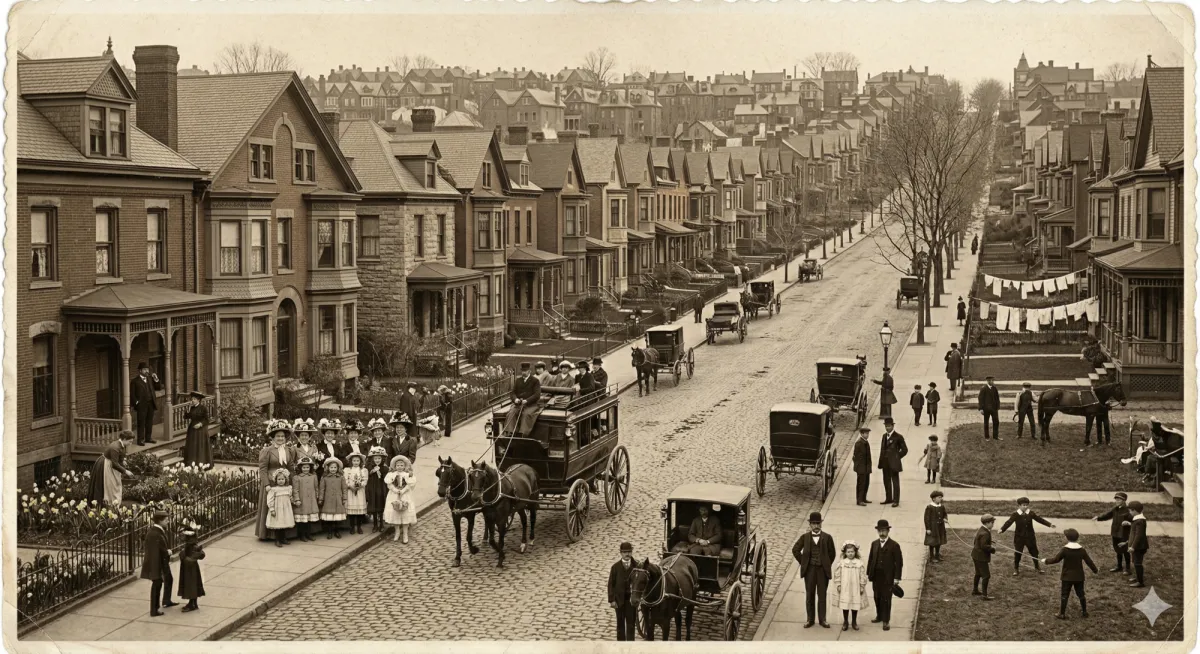
Urban row houses or tenements, filled with the sounds of industry and community
Multi-generational households, where grandparents, parents, and children lived together
Home was not defined by permanence, but by the relationships and routines within it.
Finding Home in the Records
Unlike land grants, which clearly document ownership, homes often appear indirectly in genealogical records. With careful attention, these sources can reveal where and how ancestors lived.
Census Records
Census data is one of the richest sources for understanding home life:
Addresses or locations
Household members and relationships
Occupations and income indicators
Number of rooms or residents (in some years)
These details help reconstruct the physical and social environment of a home.
City Directories
Often overlooked, city directories can:
Track annual changes in residence
Identify occupations and employers
Reveal proximity to workplaces or family members
They allow researchers to follow a family’s movement through a city over time.
Maps and Fire Insurance Plans
Historical maps, including fire insurance plans, provide:
Building layouts
Construction materials
Neighborhood structure
These records can bring an ancestor’s home to life visually, showing not just the house but the surrounding environment.
Letters and Postcards
Personal correspondence often includes:
Descriptions of homes and neighborhoods
Emotional reflections on moving or settling
Details about daily routines
These sources add warmth and personality to otherwise factual records.
Photographs
Images of homes—whether formal or candid—offer:
Architectural details
Clothing and social context
Clues about economic status
Even a simple photograph of a family on a porch can reveal volumes.
Rural and Urban Homes: A Study in Contrast
The experience of home varied dramatically depending on location.
Rural Homes
Often isolated, surrounded by farmland or wilderness
Built and maintained by the family
Centered around agriculture and seasonal work
Strong reliance on nearby neighbors for support
Urban Homes
Closely packed, sometimes overcrowded
Located near factories or businesses
Filled with diverse populations and cultures
Access to services, but often with challenging living conditions
Understanding these differences helps genealogists interpret records more accurately and empathize with ancestral experiences.
Movement and Migration
Homes also tell the story of movement. A family may appear at multiple addresses over time, reflecting:
Immigration to a new country
Moves from rural to urban areas
Economic hardship or opportunity
Changes in family structure (marriage, death, or employment)
Tracking these moves can reveal patterns:
Did families stay within the same neighborhood?
Did they move closer to work or relatives?
Did upward mobility lead to improved housing?
Each address becomes a chapter in a larger story.
Reconstructing Daily Life
When we think about our ancestors’ homes, we begin to imagine their daily routines:
Where did they cook and eat?
How did they heat their homes in winter?
Where did children sleep or play?
What sounds filled the space—machinery, animals, voices?
These questions transform genealogy from research into lived experience.
Revisiting Ancestral Homes Today
One of the most powerful experiences for genealogists is visiting an ancestral home—or the location where it once stood.
Standing in that space can:
Create a tangible connection to the past
Provide context for family stories
Inspire new questions and insights
Even if the original structure no longer exists, the land and surroundings often retain echoes of history.
Home as an Emotional Anchor
Beyond physical structure, home was an emotional anchor. It was where families:
Celebrated holidays
Marked milestones
Supported one another through hardship
For immigrants, home was also where cultures blended—old traditions carried forward while new ones took root.
Understanding this emotional dimension deepens genealogical storytelling, allowing us to connect not just with facts, but with feelings.
Reflection: The Meaning of Coming Home
Spring invites us to reflect on renewal and return. For our ancestors, “coming home” may have meant returning from work, settling after migration, or building a life in an unfamiliar place.
For us, it means rediscovering those spaces through research and imagination.
Every address, every structure, every doorway represents a place where life happened—where stories began, unfolded, and were passed down.
Bringing It All Together
Tracing the places our ancestors called home allows us to:
Understand their daily lives
Visualize their environments
Connect emotionally with their experiences
It reminds us that genealogy is not just about where people came from—but where they lived, loved, and created the foundations of family.
Because in the end, home is not just a place in history—it is a thread that connects us all.