Tracing Ancestors Through Holiday Cards and Correspondence
Tracing Ancestors Through Holiday Cards and Correspondence
Holiday cards are more than just seasonal greetings; they are tiny, annual snapshots of your family's history. For genealogists, a box of old correspondence—especially the Christmas and New Year’s cards tucked away in an attic—can be a surprisingly rich archive. While we often focus on census records and vital statistics, these personal pieces of ephemera provide a unique window into our ancestors' lives, their relationships, and even their physical presence via handwritten sentiments. This post will guide you on how to turn these festive paper scraps into powerful genealogical evidence, illuminating the hidden connections and daily realities of those who came before us.
I. The Undervalued Genealogical Treasure of Ephemera
Genealogists are primarily trained to chase formal documents—birth certificates, deeds, and census records. These are the structural pillars of a family tree. However, the true color and texture of an ancestor's life often reside in ephemera: items like tickets, flyers, programs, and, crucially, personal letters and cards. These items, by their very nature of being "temporary," were frequently discarded, making the survivors all the more valuable.
The significance of holiday correspondence goes far beyond a simple greeting. It is a record of contact, a confirmation of literacy, and a reflection of social standing. Every fold, every ink smudge, every faded stamp is a clue. When you find a card, you are not just seeing a name; you are holding a piece of paper that was selected, purchased, written on, mailed, and received by your ancestors. This direct, tactile connection is often more powerful than any digitized record. Furthermore, unlike formal documents which are standardized, these cards often contain details, nicknames, or inside jokes that bring personality and depth to a research subject who might otherwise just be a collection of dates.
II. Mining the Card for Specific Genealogical Clues
The real work of the genealogist begins by systematically breaking down the document. A holiday card offers multiple layers of evidence:
The Signature and Handwriting Analysis:
The signature is the most obvious clue. Use the handwriting—the slant of the script, the formation of the loops, the distinct way the 'T' is crossed—to confirm identity across other documents. Did "Aunt Millie" sign her cards with the same flourish she used on the official witness line of a will? Comparing handwriting samples can confirm that the person named "William J. Thompson" in the 1900 census is the same person who signed a letter in 1910. Be aware that handwriting can change due to age, injury, or literacy level, but core characteristics usually remain. In some cases, the signature might be the only existing sample of an ancestor’s handwriting, offering a personal touch missing from all other records. Look for the use of nicknames or pet names—these informal identifiers are a goldmine for confirming relationships when cross-referenced with wills or death notices.
Addresses and Postmarks-Mapping Migration:
The postmark and the address on the envelope are perhaps the most verifiable pieces of evidence. Look closely at the date stamp and the town of origin. This gives you an exact date and location for the sender. More importantly, examining a series of cards over several years can reveal subtle migration patterns or temporary moves that official records might miss. An address change on a Christmas card might predate the formal change recorded in a city directory or census. Furthermore, the style of the address (e.g., using street names vs. rural routes vs. P.O. boxes) tells you about the urban or rural context of their life. If you find a card sent from a city far away, it serves as a clue that an ancestor visited or temporarily resided there, prompting a search for hospital, school, or short-term work records in that new locale.The Senders and Recipients: Unlocking Networks: Who sent the card, and to whom was it sent? Cards from unknown cousins, godparents, former neighbors, or colleagues can unlock previously unknown branches or confirm social networks, which are crucial for the FAN (Friends, Associates, Neighbors) Principle. If your ancestor received a card every year from a family in a distant state, it suggests a sustained relationship, perhaps a sibling who moved away or an old friend from their childhood. Documenting these relationships can lead to the discovery of records in a completely new locale. A card that says "To my dear Godmother" can confirm a vital family relationship not recorded in any church or civil record.
Date Stamps and Chronology:
The postmark date establishes a precise terminus ad quem (the latest possible date) for the sender's residence at that address. This chronological sequencing is invaluable when dealing with ancestors who frequently moved or whose birth/death dates are uncertain. A card dated "Christmas 1948" confirms both the sender and recipient were alive and residing at their respective addresses at that specific moment in time. This is especially helpful in pinpointing a death date that occurred between census years.
III. Historic Context and the Evolution of the Card
Understanding the history of the holiday card itself provides further context for your findings.
The tradition of sending formal Christmas cards began in the 1840s in England and rapidly spread. By the early 20th century, mass-produced cards were common, making the practice accessible to most economic classes. This evolution means a rare, hand-painted card from 1890 tells a different story about your ancestor's social standing than a mass-produced, dime-store card from 1950.
Photographic Cards and Postcards:
The rise of photographic postcards in the early 1900s, and later, personal family photo cards, offers priceless visual evidence. These pictures often capture images of children at a specific age, pets, automobiles, and, most importantly, the actual ancestral home—a house you might only know from a street address. These are visual records tied to a precise date. The style of clothing in the photograph also provides a chronological anchor point. If a photo card shows children wearing clothes from the 1920s, it corroborates the date on the card, reinforcing its validity as a source.
Cultural and Military Clues:
The imagery on the card itself can offer a genealogical clue. Did your ancestor send cards featuring military motifs during wartime? Did a card mention their deployment or recovery? During World War II, many cards featured patriotic or service-related themes, which can confirm an ancestor's or a relative's active duty status. For immigrant ancestors, the choice of language or specific cultural symbols (e.g., European depictions of St. Nicholas versus American Santa Claus) can reinforce their ethnic identity or degree of assimilation.
Content Analysis:
Read the sentiment beyond the printed phrase. A brief note like, "We finally moved to the new house on Elm Street" or "Baby George is walking now," provides biographical details that are specific and verifiable. These personal snippets help confirm dates of moves, births, and milestones that formal records might miss or only vaguely allude to.
IV. Preservation and Digitization: Securing the Evidence
Because ephemera is, by definition, fragile, preservation is paramount. If you don't secure the evidence, it will literally turn to dust.
Handling and Storage:
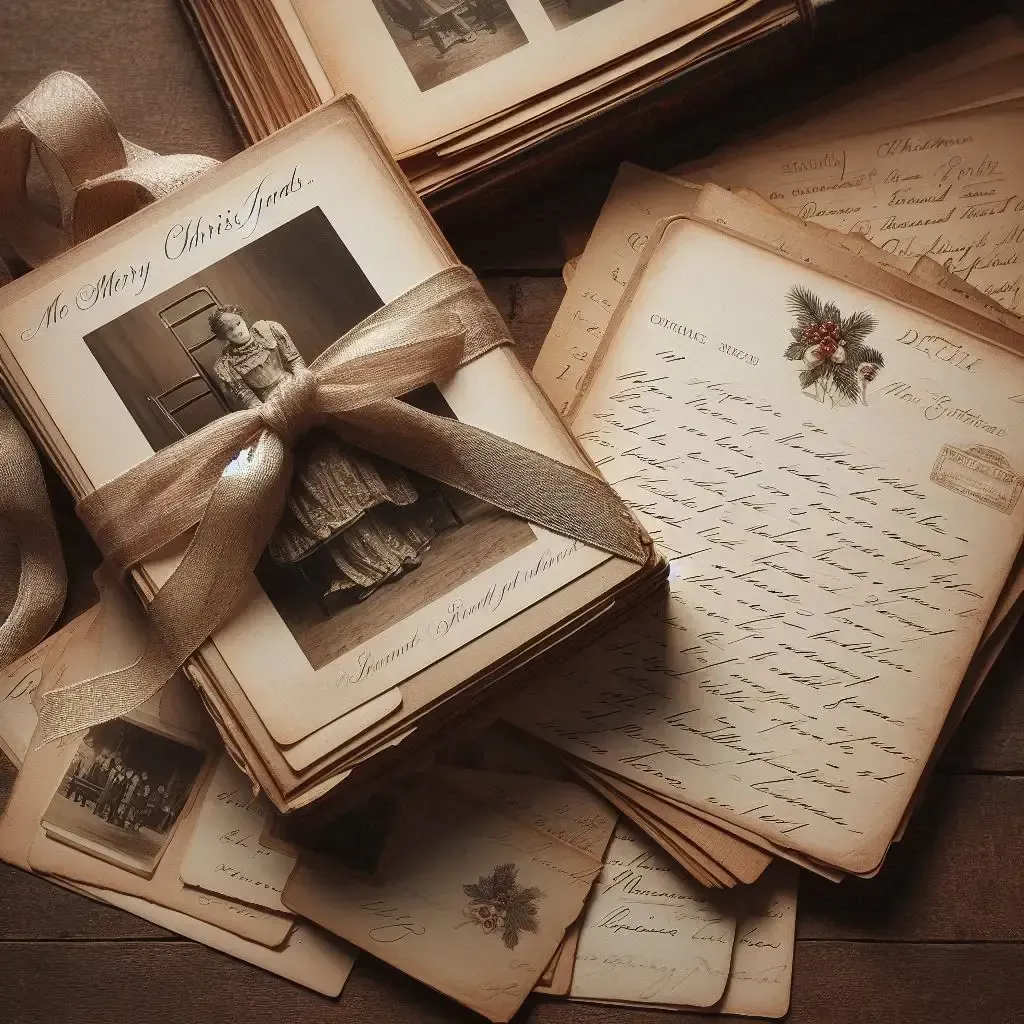
Old paper is highly acidic and will continue to deteriorate. Store cards in acid-free, lignin-free archival sleeves or folders. They should be kept flat in a cool, dark, and dry environment. Never use paper clips, rubber bands, or sticky tape, as these materials cause irreversible damage; the chemicals will leach into the paper. If a ribbon is tying the bundle, carefully cut it and store the cards individually.
High-Resolution Digitization:
When scanning, aim for high resolution (at least 600 dpi) to capture minute details: the texture of the paper, the color of the ink, the faint postmark impression, and the subtle variations in handwriting. Be sure to scan both the front and the back of the card and the envelope, as ancestors often wrote notes, dates, or full addresses on the reverse side. The envelope, especially, is a unique document that must be preserved with the card.
Integration into Research:
The final and most crucial step is integrating the card into your research management system. The scan should be attached to the relevant ancestor's profile in your genealogy software. The data gleaned (the address, the date, the name of the sender) must be cited and entered as evidence, just like a census record. This elevates the humble card from a keepsake to a fully recognized primary source. Organize the digitized files chronologically and geographically to allow for easy access when you are trying to establish a timeline.
Conclusion
The next time you encounter a stack of dusty holiday cards, resist the urge to see them as mere clutter. View them instead as a treasure trove of primary source material, each containing a tiny piece of your ancestor's life, carefully preserved and passed down. By examining the signatures, addresses, and sentiments, you can not only enrich your family tree with new names but also feel a more tangible connection to the hands that wrote those simple, festive words long ago. Start reviewing your boxes today—you might just find your next big clue hidden inside a joyful greeting.