Planting Roots: Land Grants and the Foundations of Family History
Planting Roots: Land Grants and the Foundations of Family History
In genealogy, few records are as rich and revealing as land records. They do more than document ownership—they tell stories of migration, opportunity, resilience, and legacy. For many families, land was the first tangible sign of stability in a new place, whether through government grants, homesteads, or private purchases. These records quite literally show where our ancestors planted their roots, shaping the generations that followed.
As spring symbolizes renewal and growth, it is the perfect season to reflect on how our ancestors established themselves on the land and built the foundations of family life.
A Vignette from the Past
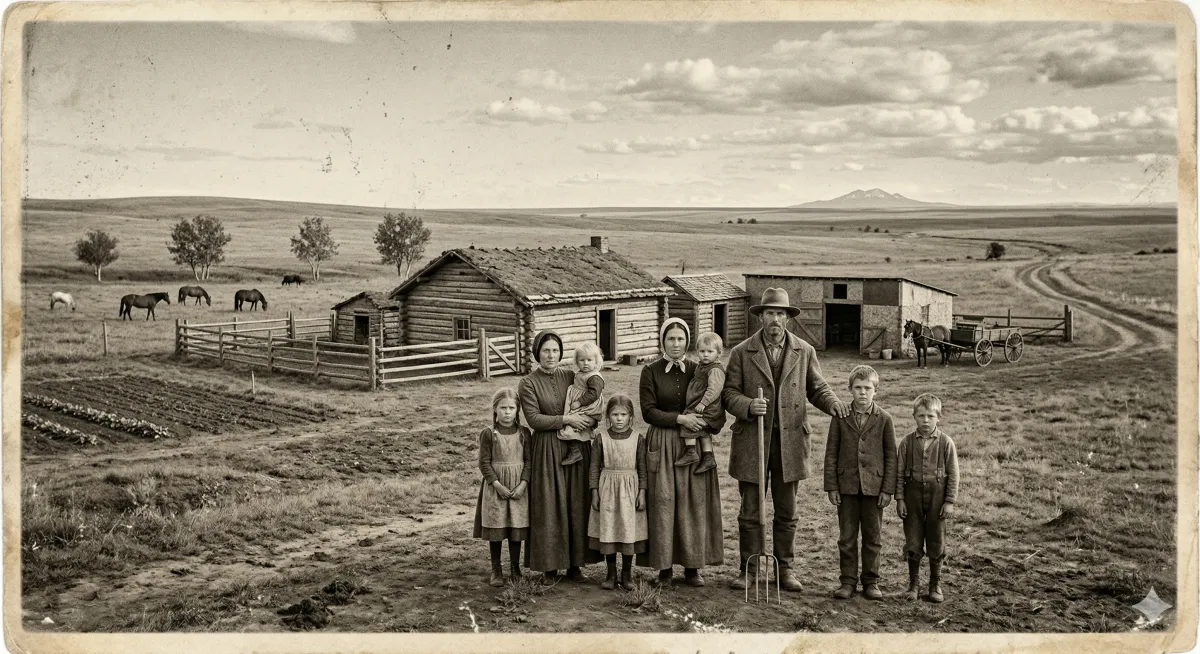
It is the spring of 1874, and Thomas McAllister stands at the edge of his newly granted parcel of land. The prairie stretches endlessly before him, a mixture of promise and uncertainty. In his hand is a folded document—his land grant—signed and sealed, marking the beginning of a new chapter for his family.
Beside him, his wife Mary kneels to press seeds into the soil, her movements deliberate and hopeful. Their children gather stones to clear a small patch for planting. The land is raw and untamed, but it is theirs. Each fence post driven into the earth, each row planted, represents not just survival, but the beginning of a legacy.
Generations later, that same parcel of land may no longer belong to the family, but the record of its ownership remains—a testament to courage, determination, and the act of putting down roots.
The Importance of Land in Family History
Land ownership has long been associated with stability, independence, and opportunity. For many ancestors, particularly in North America, obtaining land marked a turning point:
Immigrants gained a foothold in a new country
Settlers transformed wilderness into farmland and communities
Families passed property through generations, creating continuity
Land records often provide details that go far beyond ownership. They can reveal family relationships, migration patterns, economic status, and even social connections within a community.
Types of Land Records
Understanding the different types of land records is key to unlocking their genealogical value:
Land Grants
Issued by governments, these records transferred land from the state to individuals. They often include:
Name of the grantee
Date of grant
Legal description of the land
Conditions of settlement (such as clearing land or building a dwelling)
Homestead Records
Particularly significant in Canada and the United States, homestead files may include:
Applications and affidavits
Proof of residence and improvements
Witness statements (often neighbors or relatives)
Deeds and Transfers
These record the buying and selling of land between individuals and may include:
Names of buyers and sellers
Purchase price
Family relationships (e.g., land transferred between relatives)
Land Petitions
In earlier periods, individuals petitioned governments for land. These petitions often contain:
Personal background information
Military service details
Statements of need or loyalty
Each of these record types provides a different lens into an ancestor’s life.
Reading the Land: What Records Reveal
Land records can be surprisingly detailed. A single document might reveal:
Where an ancestor lived
When they arrived in a region
Who their neighbors were
How they earned a living
Whether they were literate (through signatures or marks)
Even the legal land description—township, range, and section—can be mapped to visualize exactly where a family lived.
For genealogists, this transforms abstract research into something tangible. You’re no longer just tracing names—you’re standing on the same ground your ancestors once worked.
Migration and Movement
Land records are especially useful for tracking migration. As families moved westward or settled new regions, land grants and homestead applications followed them.
Patterns often emerge:
Families settling near others from the same homeland
Generations moving together or in stages
Economic opportunities driving relocation
By studying these patterns, genealogists can better understand not just where ancestors lived, but why they moved.
Community and Connection
Land ownership was rarely isolated. Neighbors played a crucial role in survival and success, particularly in rural or newly settled areas.
Homestead applications often required witnesses, who were typically:
Neighbors
Friends
Extended family members
These names can open new avenues of research, revealing connections that might not appear in other records.
Communities often grew around these early landholders—schools, churches, and towns emerging from clusters of families who settled near one another.
Challenges in Land Research
While land records are invaluable, they can also present challenges:
Complex legal descriptions: Understanding survey systems can take time
Changing boundaries: Counties and townships may shift over time
Access issues: Some records are archived or not yet digitized
Handwriting and terminology: Older documents may be difficult to read
Despite these obstacles, the rewards are significant. Land records often provide information unavailable anywhere else.
Bringing Land Records to Life
To truly appreciate land records, genealogists can go beyond the documents:
Map the land: Use historical or modern maps to locate the property
Visit the site: If possible, stand where your ancestors once stood
Compare timelines: Align land ownership with census and vital records
Incorporate stories: Combine records with oral histories and family narratives
These steps transform research into storytelling, connecting generations through place as well as lineage.
A Legacy Rooted in the Land
For many families, land was more than property—it was identity. It represented hard work, sacrifice, and hope for the future. Even when land was sold or lost, the impact of that ownership often shaped family trajectories for generations.
Spring reminds us of this connection. Just as seeds planted long ago grow into something lasting, so too do the efforts of our ancestors continue to influence our lives today.
Reflection: What Does It Mean to Plant Roots?
Planting roots is both a physical and symbolic act. For our ancestors, it meant claiming a place in the world, building a home, and creating opportunities for those who would follow.
For genealogists, tracing those roots means:
Understanding where families began
Exploring how they grew and moved
Preserving their stories for future generations
Land records anchor these stories in something real and enduring—the earth itself.