Father Figures Who Shaped the Family Story
Father Figures Who Shaped the Family Story
When building a family tree, surnames often guide the structure of our research. They connect generations, appear consistently in records, and provide a clear path backward through time. Yet behind every name is a person—and behind many family stories are father figures whose influence extends far beyond what is written in official documents.
Fathers, grandfathers, stepfathers, uncles, guardians, and mentors all shape family identity in ways that are not always visible in records but are deeply felt across generations.
To understand their role in family history, we must move beyond documentation and into lived experience.
Beyond the Surname: Seeing the Person Behind the Record
Genealogical research often begins with paternal lines because surnames are typically inherited through fathers. This makes them an essential starting point in constructing a family tree.
However, records alone only provide structure. They do not reveal personality, relationships, or lived experience.
A census record may identify a father as a farmer or labourer. A military file may document service. A birth certificate confirms a family connection. Yet none of these records explain what kind of father he was, how he interacted with his children, or what lessons he left behind.
To understand father figures fully, we must look beyond the facts and into the meaning behind them.
Fathers in Historical Records
Many valuable genealogical sources help reconstruct paternal lives:
Census records showing household composition and occupation
Military service files detailing rank, deployment, and service history
Land ownership and property records
Immigration and naturalization documents
Employment records and trade directories
Church registers of baptisms, marriages, and burials
Newspaper articles, obituaries, and community notices
Each source adds a layer of understanding, but even combined, they often leave gaps—particularly in understanding character and influence.
That is where memory and storytelling become essential.
The Many Forms of Father Figures
Father figures are not limited to biological fathers. Family history often reveals a broader network of men who shaped upbringing and identity:
Grandfathers who provided guidance and stability
Step-fathers who became permanent caregivers
Uncles who stepped in during hardship
Older brothers who assumed responsibility early
Guardians and foster parents
Community mentors, teachers, and employers
These relationships often had as much influence as biological ties and deserve equal attention in family history research.
The Stories Records Cannot Tell
Documents capture events, but they rarely capture emotion or lived experience.
A military record may show service overseas, but not the emotional weight of leaving a young family behind. A census may show children in a household, but not bedtime routines, discipline, encouragement, or affection. A land record may confirm ownership, but not the years of labour required to maintain it.
These missing pieces are often preserved only through memory.
Father Figures as Teachers and Storytellers
One of the most enduring roles of father figures is that of teacher. Many life lessons are not formally taught—they are experienced repeatedly until they become second nature.
These lessons often include practical skills, values, and ways of understanding the world.
Skills such as farming, fishing, woodworking, mechanics, or navigation are commonly passed from father to child. So too are broader life lessons about responsibility, patience, resilience, and independence.
One memory illustrates this more clearly than any record can.
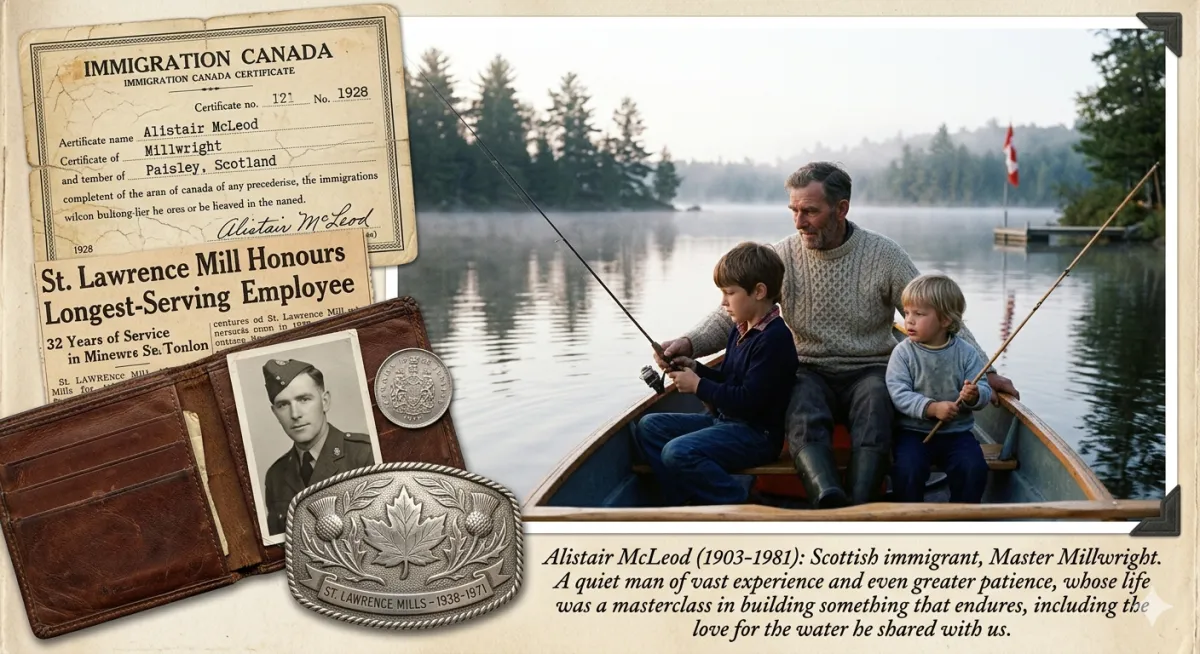
For many years in my youth, one of the traditions we looked forward to most was fishing with my father. He taught us how to tie hooks, bait them with worms, choose specific lures, and cast into the water with care. We would spend hours by the water, returning home with fish that we cleaned and prepared together for meals.
At the time, it felt like a simple family activity—something we assumed he enjoyed as much as we did.
It was only many years later, well into adulthood, that I learned something unexpected: he actually did not like fishing.
When I asked him why he had spent so much time teaching us something he did not personally enjoy, his answer was simple:
“You buy a fish, you eat for a day. You catch a fish, you eat forever.”
In that moment, the meaning of those years by the water shifted entirely.
The lesson was never about fishing itself. It was about capability. Independence. And ensuring that we had skills that would outlast him.
What once felt like leisure was, in fact, deliberate teaching. He was not only showing us how to fish—he was showing us how to learn, how to persist, and how to sustain ourselves.
Looking back, I realize that many of the habits and values I carry today were shaped in those quiet hours beside the water. And like many fatherly lessons, its full meaning only became clear long after it was given.
When the Story Is Complicated
Not all father stories are simple or idealized. Genealogy often reveals complexity—absence, distance, hardship, or fractured relationships.
These realities are part of family history as well.
Understanding context allows us to approach ancestors with balance rather than assumption. It also helps explain migration patterns, family structures, and life choices that appear in records.
Family history is not about perfection. It is about truth.
A Broader View of Legacy
Legacy is often thought of in terms of inheritance—property, surnames, or possessions. In reality, it is often expressed through behaviour, values, and repeated actions.
Some of the most enduring legacies include:
Work ethic passed through generations
Traditions of service or community involvement
Commitment to education or skill-building
Shared trades or professions
Family identity shaped by place and experience
Many of these originate with father figures, even when they are never formally recorded.
Preserving Father Stories in Family History
To preserve the influence of father figures, it is important to document both facts and lived experience.
Consider recording:
Occupations and work history
Military and community service
Hobbies, interests, and skills
Family roles and responsibilities
Personal stories shared by relatives
Photographs in formal and informal settings
Oral histories and recollections
Even small details can significantly enrich a family narrative.
The Value of Oral History
Some of the most meaningful insights come from conversation rather than documentation.
Useful questions include:
What was he like at home?
What skills did he teach you?
What do you remember doing together?
What advice did he give that stayed with you?
What stands out most about him today?
These answers often reveal personality in ways records never can.
Father Figures in Today’s Family Stories
Today’s experiences are tomorrow’s genealogy.
The moments being lived now—shared activities, conversations, traditions, and everyday lessons—will one day form the historical record future generations rely on.
Photographs taken today and memories recorded now will become the foundation of future family understanding.
A Closing Reflection
Father figures shape family history in ways that are both visible and invisible. They appear in records, but are remembered through relationships. They are documented in facts, but defined through influence.
Understanding them requires more than building a lineage. It requires listening to stories, examining lived experience, and recognizing the lessons that endure long after the moment has passed.
Because in the end, family history is not only about who came before us.
It is about what they taught us—and what we continue to carry forward.
Genealogy Challenge for June
Choose one father figure in your family history. Identify one record-based fact about his life and one personal memory or story connected to him. Combine both into a short profile that reflects not just what he did, but who he was.