The October My Grandmother Loved
The October My Grandmother Loved
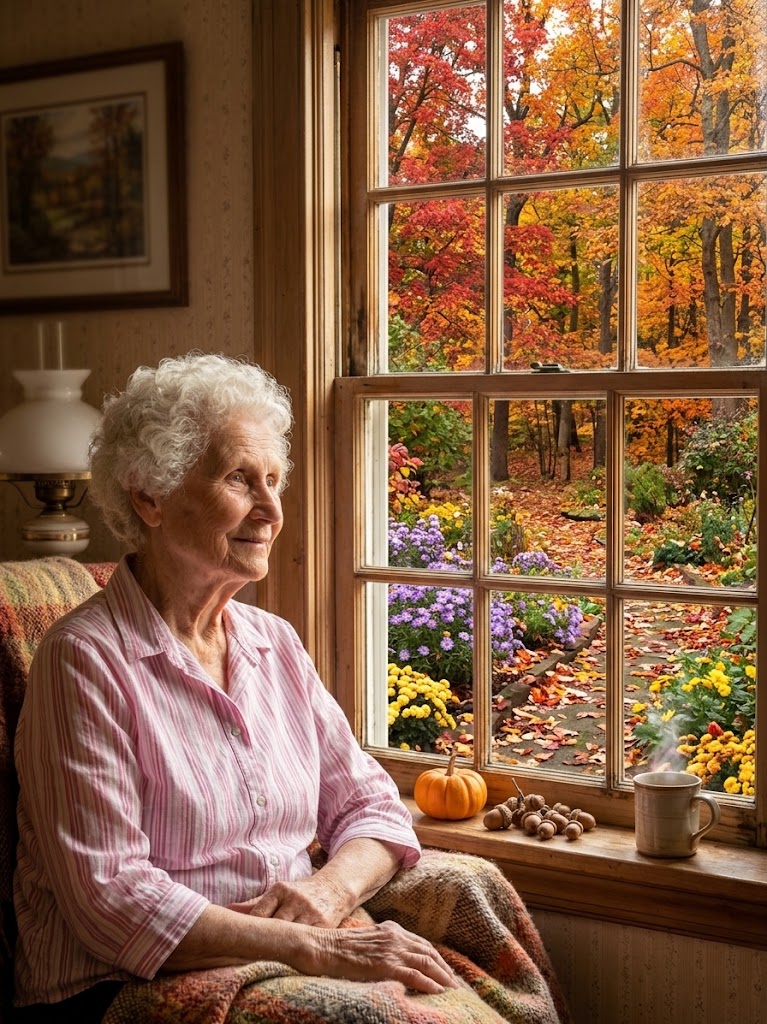
My grandmother loved October.
She loved the colours that appeared almost overnight—the golds, reds and oranges replacing the greens of summer. She loved watching the plants and trees change as they moved through another stage of their natural life cycle. And perhaps October held an even more personal significance because it was also the month she was born.
As I think about her love of October, I find myself looking at genealogy a little differently.
Family history is also a story of cycles and change. People are born, grow, marry, build families, work, move, age and eventually leave this world. Each stage leaves traces behind us. Sometimes those traces are carefully preserved. Other times, they are tucked away in an archive, recorded in a newspaper, written in a church register or waiting to be discovered in a box of family papers.
Like the changing seasons, our ancestors' lives were not static.
Every life has a beginning
Spring is often associated with new growth. The first buds appear on the trees, the grass begins to green and gardens are planted with the expectation of what they will eventually produce.
Our family histories have beginnings too.
A birth registration might tell us when and where an ancestor was born and identify their parents. A baptismal record may provide a religious connection and sometimes additional information about the family. Census records can place a growing child within a household and give us a glimpse of the people around them.
These records may seem simple, but they establish the first pieces of a life story.
And just as a tiny bud gives us the first indication of what a tree will become, a single record can lead us toward an entire family.
Then comes growth
Summer brings growth and activity. Plants mature, fields develop and families go about the business of living.
Our ancestors did much the same.
They went to school. They learned trades. They found employment. They courted and married. They had children. They moved to new communities, sometimes travelling across a province or an ocean in search of opportunity.
The records created during these years can help us understand not only what happened, but sometimes why.
School registers, employment records, city directories, land records, marriage registrations, newspapers and census records can all add another layer to the story.
One record rarely tells us everything. But several records, gathered together, can begin to show the shape of a life.
And then comes the harvest
October is the month when my grandmother's beloved trees put on their final spectacular display before winter.
It is also harvest time.
Harvest seems an appropriate metaphor for genealogy because after years of growth, we begin to see what a life has produced.
Perhaps an ancestor owned a farm. Perhaps they built a business, worked in a factory, served their community, raised a large family or contributed their skills to a profession. Perhaps their greatest legacy was less tangible: recipes, traditions, photographs, letters or stories that were passed from one generation to another.
The records associated with these years can be surprisingly revealing.
A land record might tell us when an ancestor acquired property. A newspaper might reveal a business accomplishment or community involvement. A probate file can identify family members and possessions. A photograph can show us relationships that were never written down.
The harvest of a life is found in many places.
The importance of what remains
Eventually, the leaves fall.
That part of the cycle can feel like an ending, but for the genealogist, it can also be the beginning of another kind of discovery.
Death registrations, obituaries, cemetery records, funeral cards and probate documents can help us reconstruct the final years of an ancestor's life. They may also point backward, revealing relationships, occupations, places of residence or other details that were never obvious in earlier records.
The physical leaves may disappear, but the tree remains.
In much the same way, a person's life may end, but pieces of that life can remain scattered through records and family collections.
Our job as genealogists is to find them.
Looking at genealogy through the seasons
Perhaps that is why I have come to appreciate my grandmother's love of October.
She saw beauty in change. She understood that the colours appearing on the trees were part of a much larger cycle—a cycle of growth, maturity, change and renewal.
Genealogy asks us to look at our ancestors in much the same way.
Instead of seeing a birth certificate, census return, marriage record or obituary as an isolated document, we can begin to see each one as part of a life cycle.
A record captures a moment.
Our research connects those moments.
And when we put enough of them together, we begin to see the person who lived between the dates and places recorded on the page.
This October, as the leaves change colour and another season moves toward winter, I will think of my grandmother and the October she loved.
And I will be reminded that family history, like nature, is never just about where something begins or where it ends.
It is about everything that happens in between.
A Genealogist's Takeaway
As you work on your family history this autumn, choose one ancestor and ask yourself:
What records might document the different seasons of this person's life?
Start with what you know. Then look for the records that can help you move from one stage to the next—birth, childhood, education, work, marriage, family, community, property and eventually death.
You may discover that what first looked like a collection of unrelated documents is actually the story of a life unfolding through time.