More Than a Job
More Than a Job: What Your Ancestor's Occupation Can Tell You
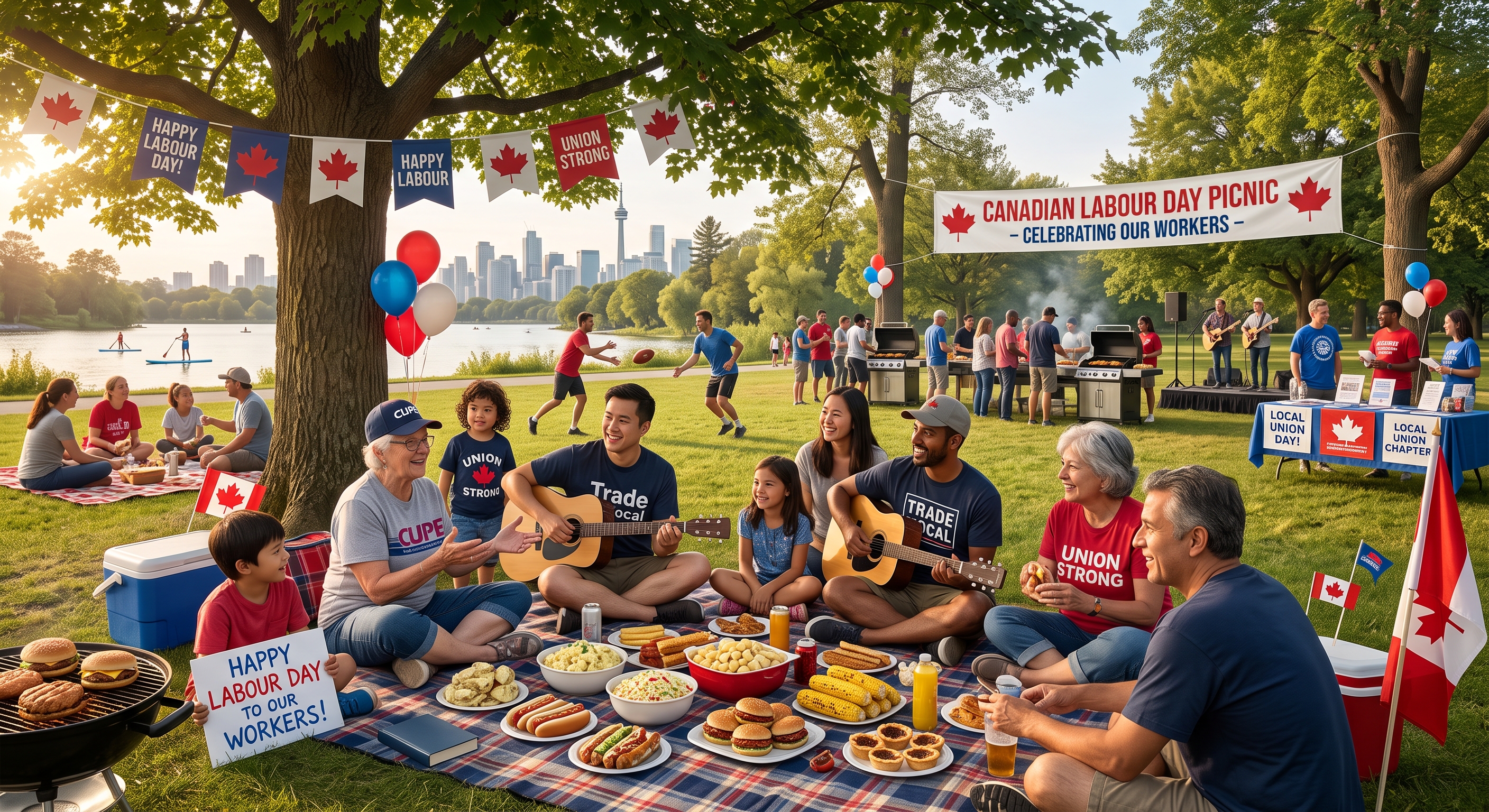
For many of us, Labour Day marks the unofficial end of summer. The long weekend gives us one last opportunity to enjoy the warm weather before September brings us back to regular routines, school, work and the familiar rhythm of autumn.
But Labour Day also gives us a reason to think about work itself and the role it has played in our families.
When we research our ancestors, we often encounter their occupations almost as an afterthought. A census might tell us that great-grandfather was a farmer, a marriage record might identify him as a labourer, and a city directory might later describe him as a carpenter. We record each detail, add it to our family tree and continue looking for the next birth, marriage or death record.
Yet an occupation can be one of the most revealing clues we have.
It can tell us what skills our ancestors possessed, the industries that supported their communities and sometimes even the reason a family moved from one place to another. It can give us a glimpse into their education, economic circumstances and daily lives. Most importantly, it can help us begin to see our ancestors as people who worked, adapted and made choices rather than simply names and dates on a pedigree chart.
The first step is to stop and ask a simple question: What did they actually do?
Looking Beyond the Occupational Title
The answer is not always as straightforward as it appears.
We tend to read historical occupations through a modern lens, and that can lead us to make assumptions about the work our ancestors performed. An occupation that sounds familiar may have had a very different meaning a hundred years ago, while an unfamiliar term may describe a highly skilled profession.
Consider the word plater. To someone unfamiliar with the shipbuilding industry, it may not mean very much. In the context of nineteenth- and early twentieth-century shipbuilding, however, a ship's plater was a skilled tradesperson who worked with the metal plates that formed the structure of a vessel.
The same problem occurs with many other occupations found in historical records. A stationary engineer was not necessarily an engineer in the way we understand the profession today. A drayman was involved in transporting goods, often using a horse-drawn vehicle. A domestic servant could have performed a wide range of duties, depending on the household in which they were employed.
Even an occupation such as farmer deserves a closer look. Was the person a landowner or a tenant? Did they operate a large farm or a small family holding? What did they grow? Did other members of the household work alongside them?
The occupation is only the starting point. To understand what it tells us about our ancestor, we need to understand what that work actually meant in the time and place where they lived.
An Occupation Can Put Someone in Context
Once we begin looking more closely at an occupation, something interesting happens. The individual starts to become part of a larger story.
A miner tells us something about the mining industry and the community that grew around it. A railway worker may help explain why a family lived in a particular town. A fisherman connects a family to a coastal community and an industry that may have shaped the local economy. A teacher may point us toward schools, education records and the social expectations of the time.
The occupation can also tell us something about the skills and opportunities available to our ancestors.
Some learned a trade through an apprenticeship. Others inherited skills from their parents or learned them within the family. Some occupations required formal education, while others depended on practical experience. For immigrants, an occupation might reveal the skills they brought with them from another country, or it might show how their working life changed when they arrived somewhere new.
This is where an occupational record becomes more than a line in a census. It begins to provide context for the life being reconstructed.
Don't Assume the First Occupation Was the Last
One of the most interesting things we can discover when we follow an ancestor through multiple records is that their working life was rarely as simple as a single occupation might suggest.
People changed jobs. They learned new skills. They responded to economic circumstances and family responsibilities. They moved to communities where work was available, or they left occupations that were no longer providing a reliable income.
A young man might begin as an apprentice, become a skilled tradesman and eventually operate his own business. A farmer might leave the land and find employment in a factory. Someone who arrived in Canada with a trade might discover that their qualifications were not recognized and take whatever work was available.
Women present another challenge because historical records do not always tell us the full story of their working lives. A woman may appear as a domestic servant in one record and later be described as a wife or homemaker. That does not necessarily mean she stopped contributing to the family's economic life. Her work may simply no longer have been recorded in the same way.
This is why it can be more useful to think about an ancestor's working life rather than searching for one definitive occupation. The changes themselves can be significant clues.
Let the Records Tell the Story
Fortunately, occupations appear in many different types of records, allowing us to build that working-life story over time.
Census records can provide a snapshot of an occupation and sometimes the industry in which a person worked. City directories can place them in a particular community and may identify an employer. Marriage and death records can provide another description of their occupation, while newspapers may reveal employment changes, promotions, accidents, retirements or other events connected to their work.
Military records can be particularly revealing for someone whose occupation involved specialized skills. Immigration and border records may help us understand whether a person continued the same trade after moving to another country.
The important thing is not to expect every record to agree perfectly.
An occupation recorded in one census may be different from the one recorded ten years later. An enumerator may have used a broad description while an employer used a more precise trade title. A family member providing information after someone's death may have described the person's occupation differently from the way it appeared in an earlier official record.
Rather than deciding immediately that one record must be wrong, look at the pattern.
What was the person doing at different stages of their life?
Were they moving toward a more skilled position?
Did their occupation change after they married?
Did a move coincide with a change in employment?
Did they leave one industry and enter another?
The answers can tell us much more than a single occupational title ever could.
Follow the Workplace
Once an occupation has been identified, the workplace itself can become a new avenue of research.
Suppose you discover that your ancestor worked for a particular factory, railway, mine, shipyard or company. Instead of stopping with the name of the employer, find out something about the organization itself.
Where was it located?
When did it operate?
What did it produce?
Who worked there?
Was the industry expanding when your ancestor was employed there?
Was it declining?
Did the company recruit workers from other countries or communities?
The answers can place your ancestor within the economic and social history of the community.
This can also lead to unexpected sources. Company histories, trade publications, union records, apprenticeship records, local histories and newspapers may provide information that is not found in traditional genealogical records.
Sometimes learning about the workplace tells us more about an ancestor than another vital record would.
Be Careful About What the Evidence Doesn't Say
There is also an important caution when working with occupational records.
An occupation is a clue, but it is not proof of everything we might want to know.
If a record describes someone as a farmer, we cannot automatically assume that they owned the land. If someone was recorded as a labourer, we should not assume that they were unskilled. If an ancestor was described as a domestic servant, we should not assume we understand all of the work they performed.
The temptation in family history is to fill gaps with what seems logical. Instead, let the evidence lead.
Research the occupation. Learn about the industry. Examine the records from different periods of the person's life. Look at the community where they lived and the opportunities available to them. Then allow the story to emerge from the evidence.
Look Again at Your Family Tree
This Labour Day, take a moment to look at the occupations recorded in your own family tree.
Choose one that you have never really investigated. Perhaps it is an occupation you understand, but have always treated as just another fact. Perhaps it is an unfamiliar word that you entered into your genealogy software without knowing exactly what it meant.
Instead of moving on to the next record, follow that clue.
Find out what the occupation meant when your ancestor was doing the work. Learn about the industry and the community in which they lived. Look for employers, newspapers, directories and other records that might tell you more.
You may discover that an occupation explains something you have wondered about for years.
Why did the family move?
Why did they settle in that particular community?
Why did several members of the family work in the same industry?
Why does an ancestor suddenly appear in another city?
Sometimes the answer is hidden in what they did for a living.
That is one of the things I love about genealogy. A single word in an old record can open a door to an entire world. Once we take the time to understand that word, we begin to see the person behind it—their skills, their challenges, their opportunities and the choices that shaped their life.
And sometimes, if we follow that occupational clue far enough, it can become something much bigger.
It can become a road map.
And that is where the story really begins.