Mapping Migration: Celebrate Immigrant Heritage Month with Your Family’s Immigration Story
Mapping Migration: Celebrate Immigrant Heritage Month with Your Family’s Immigration Story
Every family has a migration story.
Some are well-documented, bound in the pages of passport applications, naturalization papers, or border crossings. Others exist only in whispered stories passed down at family gatherings. Regardless of how much or how little you know, each migration tale marks a turning point in your family’s lineage — a leap of courage, desperation, faith, or hope. This June, during Immigrant Heritage Month, it’s a perfect time to honour those journeys.
Tracing Migration Through Records
For genealogists, mapping migration begins with the paper trail. Start with what you know: names, approximate dates, and locations. Passenger lists and border crossing records are often the first stepping stones. Ships’ manifests, for example, are more than mere rosters. They may reveal your ancestor’s full name, age, nationality, occupation, destination, and even the name of the person who paid their fare or awaited them at their arrival.
Some ship manifests provide glimpses of the past that go beyond data points — noting whether an immigrant could read or write, how much money they carried, and whether they had ever been to the country before. These details bring dimension to the journey.
Naturalization Records
Naturalization documents are another treasure trove. They often include statements of intent, actual petitions for citizenship, and sometimes photographs from the early 20th century onward. In the U.S. and Canada alike, these documents can reveal ports of departure, arrival dates, original names, and more.
Earlier records may be brief, but many jurisdictions improved documentation over time. Remember that women and children may be listed under a father or husband's name, and they often naturalize automatically with the head of the household.
Local Clues: Churches, Societies, and Newspapers
While major government records are foundational, don’t underestimate the value of local sources. Immigrant ancestors frequently settled in tight-knit ethnic enclaves. Churches often conducted services in the native language and maintained registers in beautiful handwritten scripts. Baptismal records might list godparents who were cousins, friends from the same village, or co-workers.
Ethnic newspapers shared community news in the old language and often included stories of weddings, deaths, or community efforts. Local benevolent societies, mutual aid organizations, and cultural clubs also left traces — membership lists, newsletters, or event records.
These records are invaluable not just for names and dates, but for building a narrative around why and how a family transitioned from their homeland to a new life.
Why They Left — and What They Gave Up
Migration is rarely random. Your ancestors likely left for a reason — or many. Poverty, famine, war, political persecution, economic opportunity, or family reunification are just some of the motivators.
To understand their decision, study the historical context. Did your Italian ancestors leave during post-unification economic upheaval? Were your Irish ancestors fleeing the famine? Did a war or occupation push them out?
It’s important to remember that migration also meant leaving people behind. Letters, remittances, and return trips tell the story of families trying to remain connected across vast distances.
Preserving the Journey Through Storytelling
Once you’ve gathered the facts, the next step is storytelling. Dates and names are important, but a well-told narrative breathes life into genealogy. What were the conditions like on their voyage? Were they detained at Ellis Island or Pier 21? Did they arrive with children in tow, or strike out alone to send for family later?
Include details such as:
Ship names and dates of passage
Port of departure and arrival
Conditions during travel
Personal anecdotes or diary entries (if available)
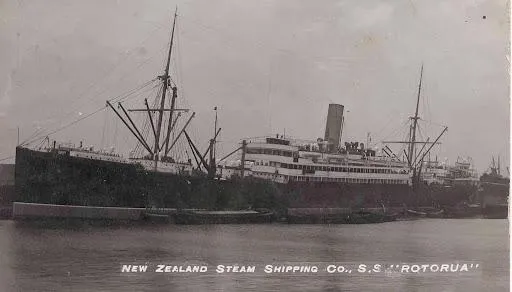
Add photographs, if you have them — images of the ships, original homes, or first houses in the new land. Even if not from your family, representative images help convey the time and place.
My Family’s Story: A Grandfather’s Brave Decision
For me, migration is more than historical curiosity — it’s part of my living memory. Family lore has it that my great-aunt married a man who had escaped slavery in the American South. He journeyed north via the Underground Railroad, eventually crossing into Ontario through Ohio. Though records are sparse, the story has been passed down with reverence, grounding our family's Canadian roots in a legacy of courage and resistance.
My grandfather, too, made a decision that changed the course of our family's history. As war loomed in Europe, he was working as a ship’s plater — a skilled and demanding trade — in the industrial shipyards of Glasgow. When the danger grew too close, he knew he had to protect his loved ones.
In 1939, he moved his young family to Aruba, where he worked for Standard Oil in San Nicolas. His work helped fuel the Allied effort, but war still followed them. As threats of bombing loomed closer, Standard Oil provided safe passage to the United States aboard the SS Bolivar in 1942. It sailed in a convoy and was fired upon during the journey. Though they arrived safely at Ellis Island, the SS Bolivar was tragically sunk on its return trip.
My grandfather’s bravery — choosing to uproot his life to shield his family from violence — left a lasting legacy. His decision echoes in every safe childhood, every family gathering, and in the stories we now share.
Inspired by his courage, I’m currently writing a book that traces our family’s migration story. It brings to life the individuals behind the dates and records — their losses, their sacrifices, and the strength that carried them through oceans, borders, and decades.
Modern Tools for Tracing Migration
Today’s genealogy platforms offer remarkable resources to aid this work. Websites like Ancestry, FamilySearch, and MyHeritage provide digitized records and immigration indexes from all over the world. Many now include tools to map migration over time, visualizing the places your ancestors called home.
Translation tools, name-variation finders, and user-submitted family trees make it easier to connect dots and find long-lost branches of the family.
DNA testing has also added a new dimension, especially for people whose paper trail is sparse. Ethnicity estimates, migration maps, and DNA matches can help confirm or challenge assumptions, and connect you with relatives whose family trees may help complete your own.
Celebrate Their Legacy This June
Immigrant Heritage Month is not just about flags or passports — it’s about recognizing the bravery embedded in our bloodlines. It’s about honouring those who said goodbye to everything familiar in search of something better, not just for themselves, but for the generations they would never meet.
So this June, take time to learn your family’s migration story. Visit the archives, scan the photos, reach out to older relatives. Capture the memories, stitch the facts together, and tell the story.
Because when we understand how our ancestors got here, we begin to understand who we are — and who we can become.